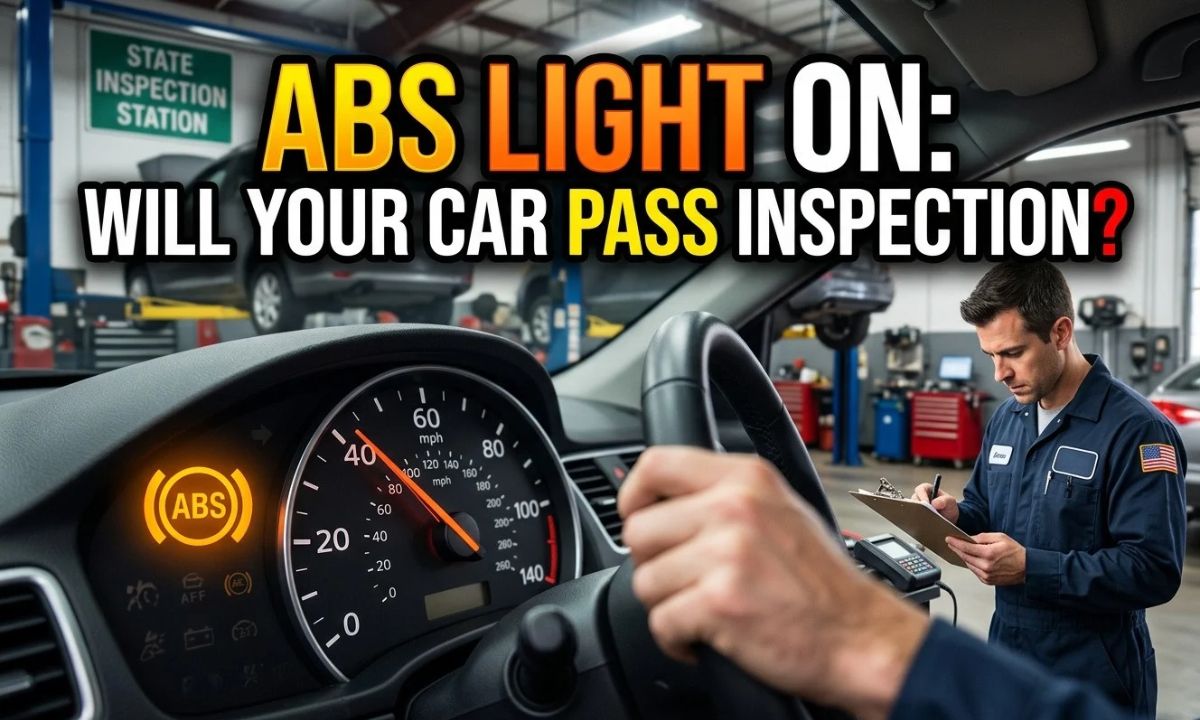
An illuminated ABS warning light does not automatically mean your car will fail every U.S. inspection. Inspection rules are set by individual states and can differ substantially. In some states, an amber ABS light by itself may not cause rejection, while other inspection programs can treat an ABS warning as a safety defect. Before your inspection, check your state’s exact requirements and have the ABS fault diagnosed rather than simply clearing the light.
For drivers in the United States, the answer to whether an ABS light will prevent a vehicle from passing inspection depends primarily on where the vehicle is registered and what type of inspection it must undergo. There is no single nationwide rule that makes an illuminated ABS light an automatic failure for every passenger vehicle. Virginia, for example, specifically states in its safety inspection regulations that an amber ABS or anti-lock brake lamp alone is not a reason to reject a vehicle. Other states and inspection programs may evaluate ABS operation differently.
The ABS warning light should still be taken seriously. The anti-lock braking system monitors wheel behavior and helps prevent wheel lock during hard braking. When the warning lamp stays illuminated after the normal startup bulb check, the vehicle has detected an ABS-related fault or stored malfunction. Depending on the vehicle, conventional braking may remain available even though the anti-lock function is disabled. Manufacturer guidance commonly tells drivers to have the system inspected promptly.
The safest approach is therefore to separate two questions: whether the vehicle can legally pass a particular inspection and whether the vehicle is safe to drive. A car might be eligible to pass a specific inspection with the amber ABS light illuminated while still needing prompt repair. If the red brake warning light also comes on, the brake pedal feels abnormal, braking performance changes, or there is a brake-fluid problem, treat the situation as a potential braking-system problem rather than an inspection-only issue.
Will a Car With the ABS Light On Pass a U.S. Inspection?
There is no single nationwide answer. Vehicle inspection programs in the United States are established primarily by state law, and the items checked can vary by state, county, vehicle type, and inspection category. Some states conduct comprehensive safety inspections, some primarily conduct emissions inspections for certain vehicles and locations, and some have eliminated routine safety inspections for ordinary passenger vehicles.
That means an illuminated ABS light can have different consequences depending on where the vehicle is registered. The safest answer is that an ABS light may cause a failure in some inspection programs, may not automatically cause a failure in others, and may be irrelevant to a non-safety inspection that does not evaluate the ABS system.
Virginia provides a useful example of why a blanket answer is misleading. Its safety inspection regulations state that an amber ABS or anti-lock brake lamp alone should not result in rejection. However, that does not mean every brake-related warning is acceptable. The same inspection rules distinguish the amber ABS lamp from the red brake-failure warning lamp and identify conditions that can require rejection.
Texas provides another important example. Since January 1, 2025, non-commercial vehicles in Texas are no longer required to obtain a safety inspection before registration. Certain counties still require emissions inspections for non-commercial vehicles, while commercial vehicles remain subject to inspection requirements. Therefore, a Texas passenger vehicle owner asking whether an ABS light will fail a safety inspection may not even be dealing with a required safety inspection, depending on the vehicle and registration circumstances.
Source: le-cdn.hibuwebsites.com
State safety inspection
An ABS warning may be part of the inspection criteria, but the exact pass-or-fail rule varies by state.
Emissions-only inspection
An ABS warning generally concerns the braking system rather than emissions, so it may not be part of an emissions inspection’s criteria.
Commercial vehicle inspection
Commercial vehicles can be subject to different and more extensive inspection requirements than ordinary passenger vehicles.
No routine safety inspection
In states or circumstances where a passenger vehicle is not required to undergo a safety inspection, the question of passing that safety inspection may not apply.
Why You Should Check Your State Instead of Relying on a General Rule
A common mistake is assuming that federal vehicle-safety requirements automatically determine the rules for an annual state inspection. Federal standards govern vehicle and equipment requirements, but state inspection programs establish their own procedures for vehicles registered in that state. NHTSA materials show that ABS warning indicators are an important part of vehicle braking-system design, but those federal requirements should not be confused with every state’s inspection checklist.
Before paying for an inspection, identify the state where the vehicle is registered, determine whether the vehicle requires a safety inspection, and review the current official inspection rules. This is especially important because inspection laws can change, as demonstrated by Texas’s 2025 elimination of routine safety inspections for non-commercial vehicles.
What Does an ABS Light Mean?
The ABS light is a warning indicator for the anti-lock braking system. ABS uses wheel-speed information and electronic controls to help prevent the wheels from locking during hard braking. When the system detects a malfunction, the warning lamp can remain illuminated to alert the driver that ABS functionality may not be available.
An ABS fault does not necessarily mean that all braking has disappeared. On many passenger vehicles, the conventional hydraulic braking system can continue to provide normal braking while the anti-lock function is disabled. Manufacturer manuals commonly explain this distinction. However, the exact behavior depends on the vehicle, the fault, and whether other warning lamps are illuminated.
NHTSA documentation also explains why the ABS malfunction indicator matters: the warning system is intended to tell the driver and inspection personnel that a problem exists in the ABS system. The indicator is designed to illuminate when a qualifying malfunction is present rather than remain illuminated when the system is operating normally.
Source: acg.aaa.com
ABS light briefly illuminates at startup
This is normally part of the dashboard bulb check. If the lamp turns off after the check, that is generally expected behavior.
ABS light stays on
A persistent lamp generally means the vehicle has detected an ABS-related malfunction or stored fault.
ABS and red BRAKE lights are both on
This combination deserves greater caution because it can indicate a broader brake-system problem rather than an isolated ABS fault.
ABS light flashes or behaves unusually
The meaning varies by vehicle. Consult the owner’s manual and have the system diagnosed rather than assuming the cause.
ABS Light Versus the Red Brake Warning Light
The amber ABS warning and the red brake-system warning are not interchangeable. An amber ABS lamp commonly points to a problem with the anti-lock function. A red brake warning can indicate a more fundamental brake-system issue, depending on the vehicle.
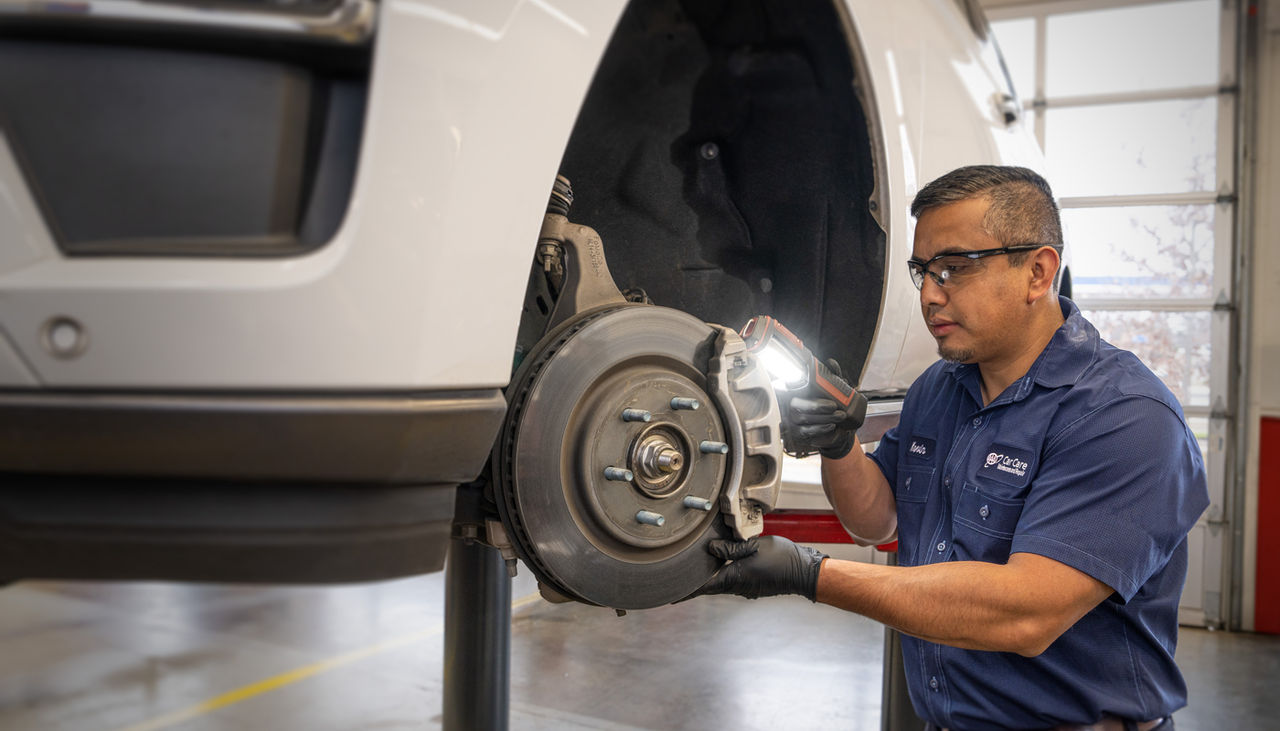
If the red brake warning remains illuminated after the parking brake is released, or if the brake pedal feels soft, sinks unusually far, requires substantially more effort, or produces noticeably longer stopping distances, do not treat the situation as an inspection inconvenience. Have the braking system evaluated immediately and consider towing the vehicle if braking performance is compromised.
Amber ABS only
The anti-lock function may be unavailable while conventional braking remains operational, but the fault should still be diagnosed.
Red BRAKE warning only
The cause can involve the primary braking system, parking brake, brake fluid, or another vehicle-specific condition.
Amber ABS plus red BRAKE
Treat this combination as more serious and verify the braking system before driving unnecessarily.
Common Causes of an Illuminated ABS Light
An ABS warning light is a symptom, not a diagnosis. Several different components can trigger it, and the correct repair depends on the diagnostic trouble code and the vehicle’s design. Guessing at the failed part can lead to unnecessary repairs.
Wheel-speed sensors are common points of failure because they operate near the wheels and are exposed to road debris, moisture, corrosion, physical damage, and wiring problems. A damaged tone ring or reluctor ring can also cause the sensor to report incorrect wheel-speed information.
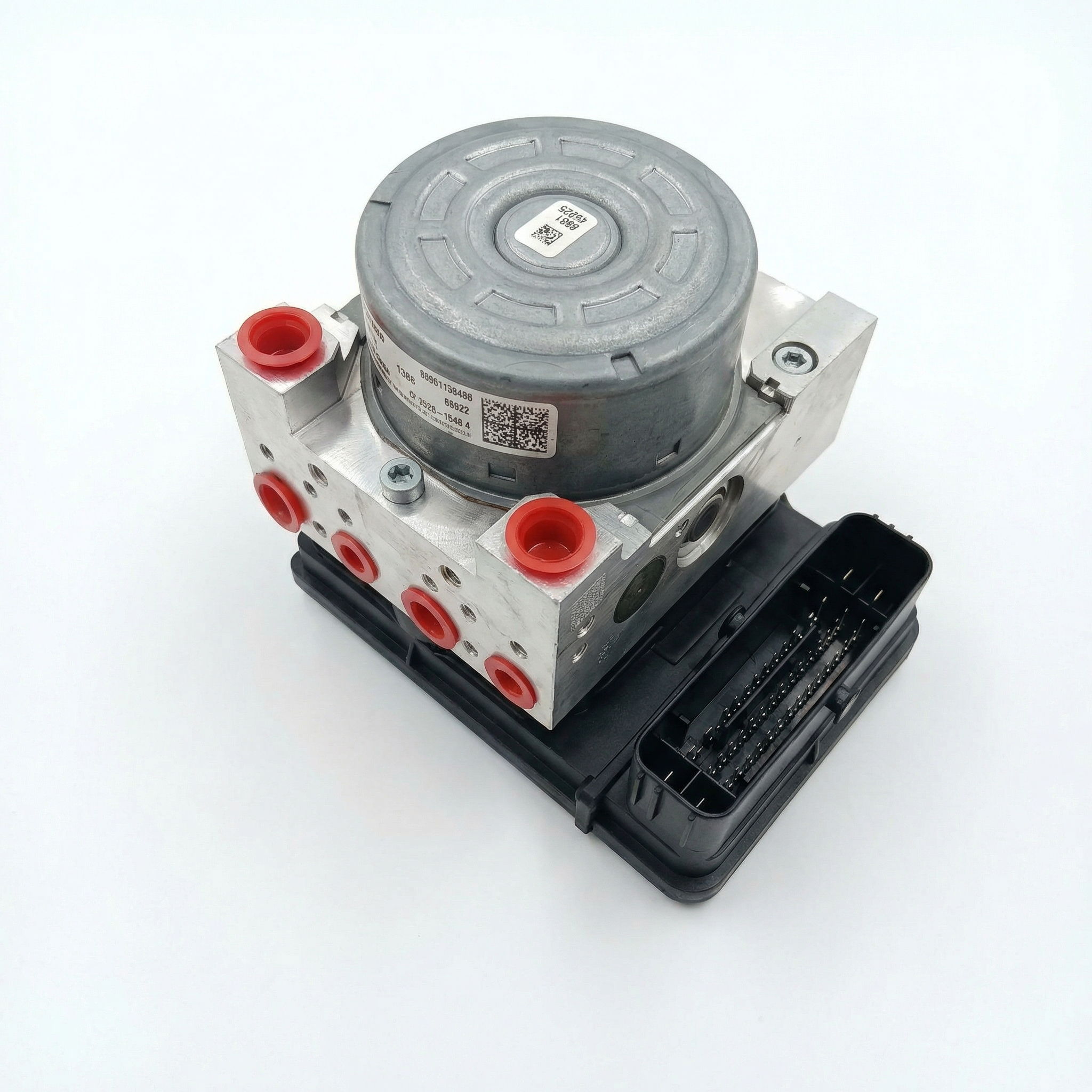
Other possibilities include damaged wiring or connectors, low system voltage, a blown fuse, a malfunctioning ABS control module, a hydraulic control unit problem, or another fault identified by the vehicle’s ABS controller. The exact list varies considerably by make and model.
Source: y-ic.jp
Wheel-speed sensor fault
The sensor monitors wheel rotation and sends information to the ABS controller. A failed, damaged, contaminated, or disconnected sensor can trigger an ABS warning.
Sensor wiring or connector problem
A broken wire, corrosion, loose connector, or damaged harness can interrupt the wheel-speed signal.
Damaged reluctor or tone ring
The sensor reads changes associated with the rotating ring. Damage, corrosion, or an incorrect air gap can interfere with the signal.
ABS control module or hydraulic unit fault
Electronic or hydraulic components can fail and may require specialized diagnosis or repair.
Low voltage or electrical problem
A weak battery, charging problem, fuse issue, or electrical connection problem can sometimes trigger warning lights.
Why Replacing a Wheel-Speed Sensor Without Diagnosis Can Backfire
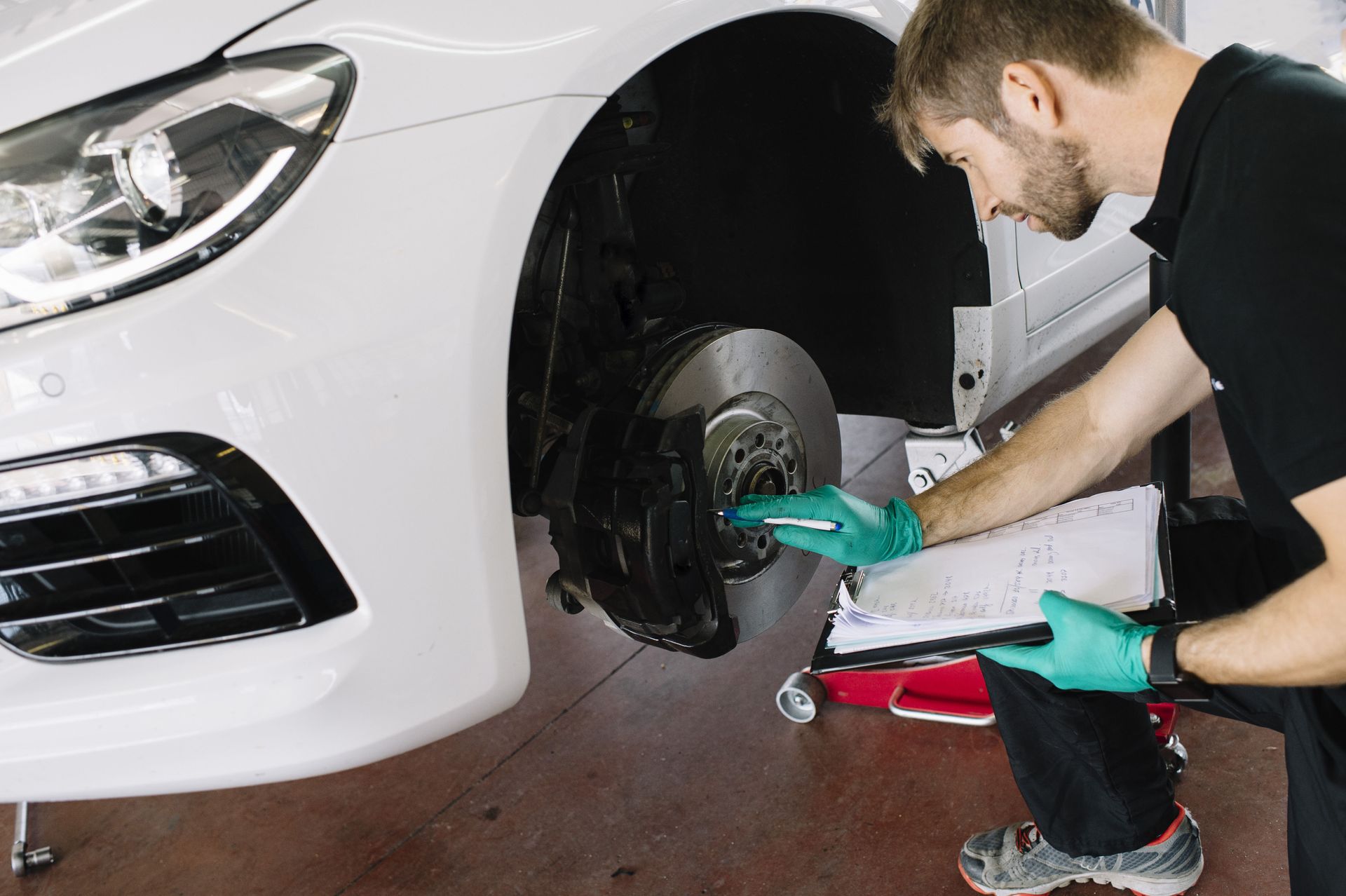
A wheel-speed sensor is only one possible cause. If the real problem is damaged wiring, a wheel bearing, a reluctor ring, a power-supply problem, or the ABS module, replacing the sensor may not solve the warning. A proper diagnostic process identifies the affected circuit and verifies the cause before parts are replaced.
This matters before an inspection because clearing the warning light without repairing the cause can result in the light returning, and some diagnostic systems can retain useful fault information that is lost when codes are erased prematurely.
How to Diagnose an ABS Light Before Inspection
The best preparation is to diagnose the ABS system before the inspection date. Start with simple observations, then move to electronic diagnosis. Do not erase the fault code until the cause has been investigated.
A key point is scanner capability. Many inexpensive OBD-II code readers are designed primarily for generic engine and emissions-related diagnostic codes. An ABS warning can be stored in a separate ABS or brake-control module. A scan tool must support that module and the specific vehicle to retrieve the relevant information.
Source: carobjective.com
Step 1: Confirm the warning
Start the vehicle and observe whether the ABS light performs the normal startup check and then goes out or remains illuminated.
Step 2: Check for other warnings
Look for a red brake warning, traction-control warning, stability-control warning, or other indicator appearing at the same time.
Step 3: Evaluate braking feel
If the pedal feels soft, sinks unusually far, requires abnormal force, or braking performance has changed, prioritize a brake inspection rather than continuing to drive for an inspection appointment.
Step 4: Inspect obvious external issues
With the vehicle safely parked, look for visibly damaged wheel-speed sensor wiring, loose connectors, or signs of physical damage. Do not work beneath an improperly supported vehicle.
Step 5: Scan the ABS module
Use a compatible scan tool that can communicate with the ABS system. Record the diagnostic trouble codes before clearing anything.
Step 6: Diagnose the specific circuit
Use the code, live wheel-speed data, wiring information, and vehicle-specific service procedures to determine the actual cause.
Step 7: Repair and verify
Repair the underlying fault, clear codes only when appropriate, and confirm that the ABS lamp remains off after the vehicle completes its normal self-check.
What a Successful Repair Looks Like
A successful repair is more than turning the dashboard light off. The underlying ABS fault should be corrected, the system should complete its self-check normally, and the warning should remain off under the conditions that previously triggered it.
If a repair shop clears the code but the ABS lamp returns shortly afterward, the problem has not necessarily been resolved. A returning warning should be diagnosed again rather than repeatedly reset.
Why a Generic OBD-II Reader May Not Find the ABS Problem
OBD-II is often associated with the check-engine system, but modern vehicles contain multiple electronic control modules. A basic reader may communicate with the powertrain module while lacking access to the ABS controller. If the ABS lamp is the only warning you are investigating, confirm that the scan tool specifically supports ABS diagnostics for your vehicle.
Should You Clear the ABS Light Before Inspection?
Do not clear the ABS warning merely to make the vehicle appear inspection-ready. Clearing a code does not repair the underlying problem, and the warning can return once the vehicle detects the fault again.
There is also a broader diagnostic reason to avoid unnecessary code clearing. Stored diagnostic information can help a technician determine what happened and under what conditions. Erasing it before diagnosis can remove useful evidence and make troubleshooting less efficient.
If the repair has genuinely corrected the fault, a qualified technician or appropriate scan tool may clear the code as part of the repair process. The vehicle should then be checked to confirm that the ABS system operates normally and the warning does not return.
Source: cdn.go-parts.com
Bad approach
Clear the ABS code, drive straight to inspection, and assume the problem is solved.
Better approach
Read the ABS codes, identify and repair the cause, clear the code when appropriate, and verify the system before inspection.
Best approach when the fault is unclear
Have a qualified automotive technician diagnose the ABS system using vehicle-specific service information and a scan tool with ABS access.
Can Disconnecting the Battery Turn the ABS Light Off?
Disconnecting the battery is not a reliable repair method for an ABS fault. Some vehicles may temporarily lose certain stored information after battery power is removed, while others retain fault information or quickly detect the problem again. Battery disconnection can also affect learned settings or other electronic systems.
More importantly, removing power does not fix a damaged sensor, broken wire, defective module, or mechanical problem. If the warning returns, the original fault remains. Diagnosis is a better strategy than attempting a reset.
Inspection Scenarios: When an ABS Light Is More or Less Likely to Matter
The practical effect of an ABS warning depends on the inspection program. The following scenarios illustrate why the vehicle’s state, registration category, and inspection type should be established before deciding whether the warning will affect the result.
These examples are decision aids rather than a substitute for the current rules in your state. Inspection regulations can change, and special vehicle categories can have separate requirements.
Source: irp-cdn.multiscreensite.com
State requires a safety inspection and specifically checks ABS
An illuminated ABS lamp can become a failure item if the state’s inspection rules identify ABS malfunction or warning indicators as a rejection condition.
State safety inspection does not automatically reject an amber ABS lamp
The vehicle may pass that specific inspection despite the lamp. Virginia is an example where the regulations specifically state not to reject solely because the amber ABS or anti-lock lamp is on.
Inspection is emissions-only
The ABS system may not be part of the emissions test, so an ABS lamp may not determine the emissions result.
Passenger vehicle is exempt from routine safety inspection
The ABS warning may have no inspection pass-or-fail consequence if the vehicle is not required to undergo a safety inspection.
Commercial vehicle
Do not apply ordinary passenger-vehicle assumptions. Commercial vehicle inspection rules can be different and may include specific ABS requirements.
Example: Virginia
Virginia’s motor vehicle safety inspection regulations provide a clear example of a state-specific rule. The regulation states that inspectors should not reject a vehicle solely because the amber ABS or anti-lock brake lamp is illuminated. However, other brake warning conditions can still result in rejection. This distinction shows why the color and type of warning lamp matter and why a general statement such as ‘ABS light always fails inspection’ is inaccurate.
Example: Texas
Texas changed its inspection system beginning January 1, 2025. Non-commercial vehicles are no longer required to obtain a safety inspection before registration, although emissions inspections remain required for non-commercial vehicles in 17 specified counties. Commercial vehicles continue to have inspection requirements. For a Texas driver, therefore, the first question is whether the vehicle is subject to a safety inspection at all.
What to Do If Your Inspection Is Tomorrow and the ABS Light Is Still On
If the inspection is tomorrow, do not assume that a last-minute reset is the best solution. First determine what kind of inspection your vehicle actually requires and whether your state treats an illuminated ABS lamp as a rejection item.
If the vehicle has only an amber ABS warning and braking feels normal, arrange diagnosis as soon as possible. If the red brake warning light is also on or the brakes feel abnormal, stop treating the situation as an inspection problem and address the braking system first.
If your state’s rules permit an illuminated ABS lamp but the vehicle otherwise meets inspection requirements, the vehicle could potentially pass despite the warning. Passing, however, does not mean the ABS fault should be ignored. The warning indicates that an important electronic safety system may not be functioning as intended.
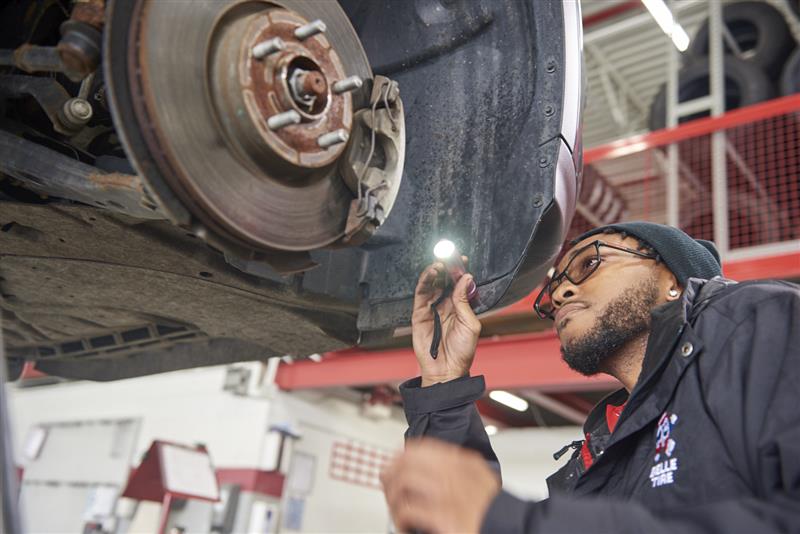
Source: belletirecareers.com
Check the inspection requirement
Verify the current state rule and whether your vehicle requires a safety inspection, emissions inspection, commercial inspection, or another type of examination.
Check all warning lights
An isolated amber ABS lamp is different from an ABS lamp accompanied by a red brake warning.
Check brake feel
Do not drive to inspection if the brake pedal is soft, sinks unusually far, braking performance is significantly reduced, or the vehicle has another serious brake symptom.
Get the ABS system scanned
Use a scan tool with ABS-module capability or have a repair shop retrieve the stored ABS codes.
Do not conceal the fault
Avoid repeated resets or temporary fixes intended only to make the warning disappear for the inspection.
When You Should Not Drive to the Inspection Station
An inspection deadline should never override a potentially dangerous brake condition. If the red brake warning light remains on, the brake pedal feels soft or unusually low, the vehicle pulls severely during braking, stopping distances have increased, brake fluid is leaking or very low, or you hear or feel a major braking problem, have the vehicle evaluated immediately. Depending on the symptoms, towing may be safer than driving.
An amber ABS light by itself can represent a different level of urgency because conventional braking may remain available on many vehicles. Even then, the loss of anti-lock assistance can matter during hard braking, particularly on wet, snowy, icy, or loose surfaces.
ABS Inspection Checklist for U.S. Drivers
Use this checklist before scheduling or attending an inspection. It is designed to prevent the most common mistake: assuming that a warning light automatically determines the inspection result without first identifying the applicable state rules.
Source: img.nextage.jp
1. Identify your state
Inspection rules are based on the vehicle’s registration jurisdiction, not a nationwide standard.
2. Identify the inspection type
Determine whether you need a safety inspection, emissions inspection, commercial inspection, or another state-required test.
3. Confirm the ABS light behavior
A brief illumination during startup can be normal. A lamp that stays on after startup indicates a condition requiring investigation.
4. Look for additional warning lamps
Pay particular attention to a red brake warning lamp appearing with the ABS warning.
5. Evaluate braking performance
Any unusual pedal feel, pulling, fluid leak, grinding, or significant change in stopping behavior should be addressed before inspection.
6. Scan the correct module
Make sure the diagnostic equipment can communicate with the ABS system, not just the engine computer.
7. Repair the cause
Do not replace parts based solely on the warning lamp. Diagnose the fault and verify the repair.
8. Confirm the warning stays off
After repair, verify that the ABS system completes its self-check without returning the warning.
9. Recheck state requirements
Use the current official inspection rules rather than an old checklist, forum post, or generic automotive website.
The Three Questions to Ask an Inspection Station
If the rules are unclear, ask the inspection station three specific questions before arriving: Does this inspection evaluate the ABS warning lamp? Does an illuminated amber ABS lamp constitute a rejection item for this vehicle category? Does the station distinguish the amber ABS lamp from the red brake-system warning lamp? Getting these answers before the appointment can prevent an unnecessary trip.
Frequently Asked Questions
Q
Can I pass inspection with the ABS light on?
Possibly. There is no universal U.S. rule that makes an illuminated ABS lamp an automatic failure for every vehicle and inspection program. The result depends on the state, inspection type, and vehicle category. Virginia, for example, specifically says an amber ABS or anti-lock lamp alone should not cause rejection under its safety inspection regulations.
Q
Will an ABS light fail an emissions inspection?
Usually, the ABS system is not the primary focus of an emissions inspection because ABS is a braking-system function rather than an emissions-control function. However, emissions programs can have their own requirements, and a state may combine emissions testing with other registration requirements. Check the current rules for your location.
Q
Is it safe to drive with the ABS light on?
An amber ABS light by itself can mean that conventional braking remains available while anti-lock braking is disabled, but the vehicle should be diagnosed promptly. Use additional caution because the wheels may be more likely to lock during hard braking. If the red brake warning light also comes on, the pedal feels abnormal, braking performance changes, or brake fluid is low, stop driving when safe and have the vehicle evaluated.
Q
Can I reset the ABS light before inspection?
You should not reset the light simply to hide a fault. Clearing a code does not repair the failed component, and the warning can return when the system detects the problem again. Diagnose and repair the underlying issue first, then clear the code when appropriate and verify that the warning remains off.
Q
Why does my cheap OBD2 scanner not show an ABS code?
Many basic OBD2 readers primarily access the engine or powertrain diagnostic system. The ABS controller can be a separate module. If the scanner does not support ABS diagnostics for your specific vehicle, it may not retrieve the code responsible for the ABS warning. A professional or multi-system scan tool may be required.
Q
Does Texas require a safety inspection for a passenger car?
As of January 1, 2025, Texas no longer requires non-commercial vehicles to obtain a safety inspection before registration. However, non-commercial vehicles registered in 17 specified Texas counties still need a passing emissions inspection before registration, and commercial vehicles remain subject to inspection requirements. Check the current Texas requirements for your vehicle and county.
✦ Wrapping Up
Conclusion
If your ABS light is on, your car may or may not pass inspection. The deciding factor is not a single nationwide rule but the inspection requirements that apply to your vehicle in its state of registration. Some programs may reject an ABS warning, some may allow an amber ABS lamp by itself, and some passenger vehicles may not be subject to a routine safety inspection at all.
The more important point is that an illuminated ABS lamp is a diagnostic warning, not simply an inspection nuisance. The system has detected a condition that can affect anti-lock braking. The sensible approach is to identify the applicable inspection rule, scan the ABS module, diagnose the actual fault, repair it when necessary, and verify the warning does not return.
If you are facing an inspection soon, do not rely on a battery disconnect or last-minute code clearing. Confirm your state’s current requirements and have the braking system checked if there is any sign that normal braking performance has changed.
💡 Key Takeaway
Before your inspection, determine your state’s exact inspection requirements, confirm whether the vehicle needs a safety inspection, and have the ABS system professionally scanned if the warning remains illuminated. If the red brake warning light is also on or braking feels abnormal, address the brake problem before driving to inspection.