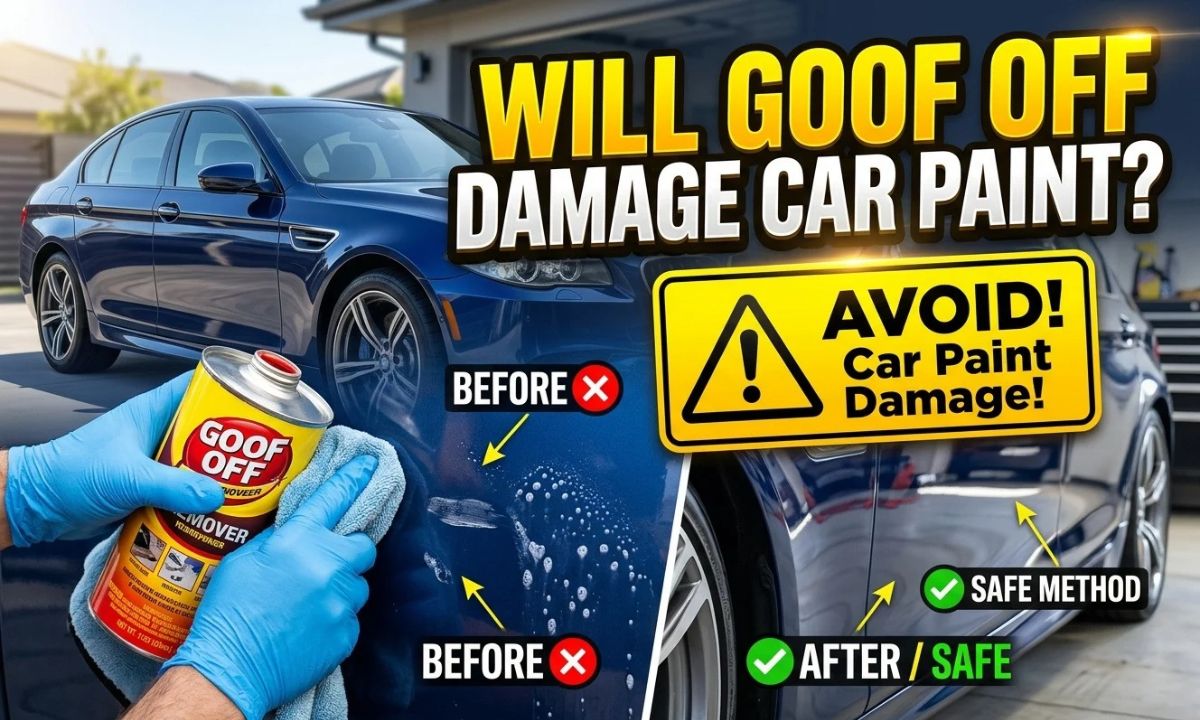
Yes, Goof Off can damage car paint, but the risk depends heavily on the exact Goof Off formula, the condition of the paint, and how the product is used. Some Goof Off products are made for specific automotive surfaces, while other formulas can damage certain automotive paints or clear coats.
For drivers in the United States, the safest rule is simple: do not treat every Goof Off product as interchangeable. Goof Off is a product family, and its formulas have different intended uses. A heavy-duty remover that works well on a garage floor, metal tool, or other hard surface may be unsuitable for a painted vehicle.
Modern cars commonly use a base coat protected by a clear coat. A strong solvent can affect the finish, especially when it is left on too long, rubbed aggressively, or used on a damaged, aged, freshly repaired, or otherwise vulnerable surface. Product directions matter more than the name on the bottle.
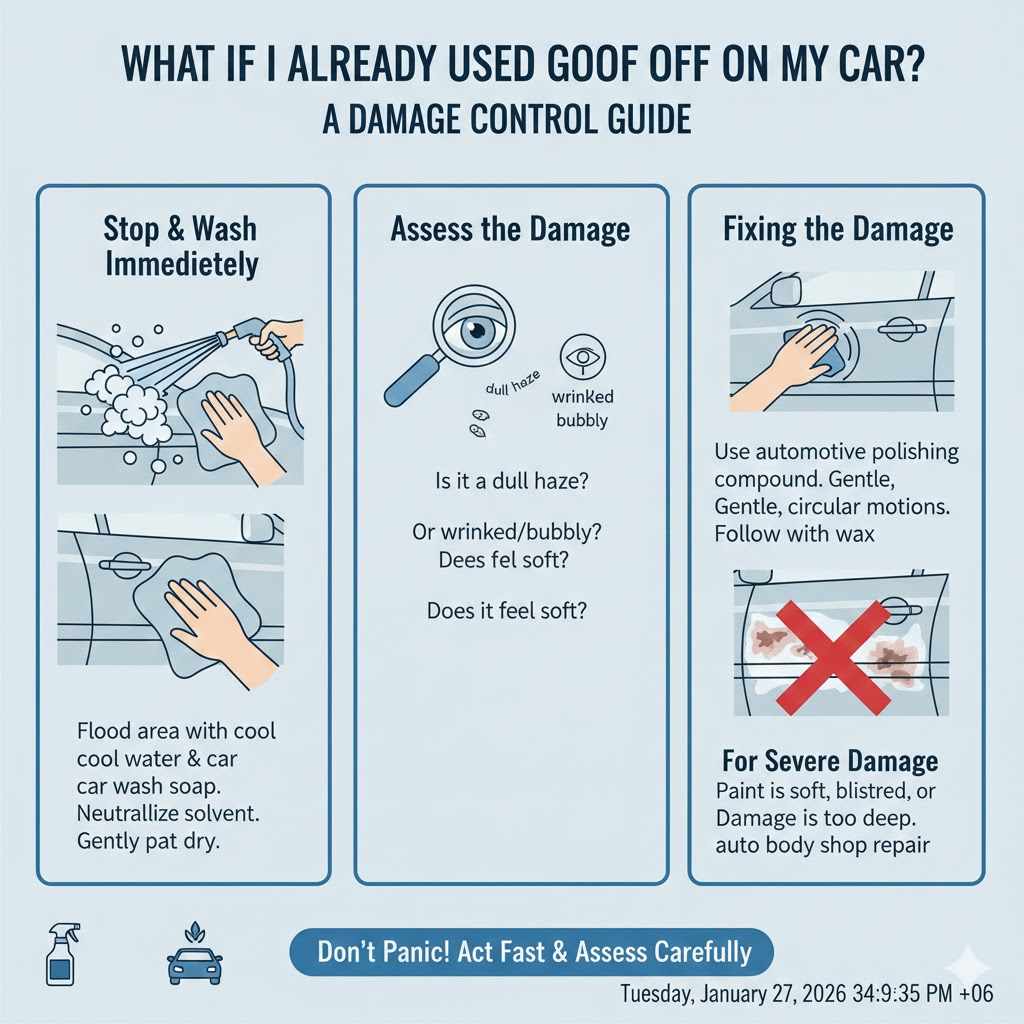
If you already used Goof Off on your car, do not panic. Stop the chemical exposure, remove the product as directed, wash the area with automotive-safe soap and water, and inspect the finish under good lighting. If the surface has become cloudy, tacky, discolored, or noticeably different in gloss, further rubbing can make the problem worse.
Yes. Some Goof Off products can damage automotive paint, but the answer is not the same for every formula. The product label, intended surface, exposure time, and condition of the vehicle all affect the result.
Goof Off Pro Strength is a particularly important example. Its product guidance warns that it can damage some automotive paints, and current product information does not recommend using the Pro Strength formula on painted automotive surfaces. That makes it a poor choice when the goal is simply to clean residue from a vehicle.
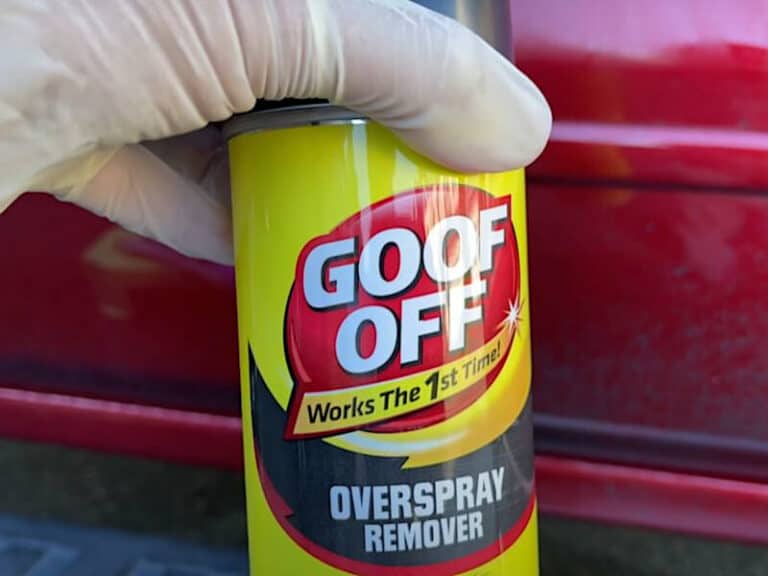
The situation is different with Goof Off Overspray Remover. That product is specifically described for automotive surfaces and fully cured OEM surfaces, including dried paint overspray. Even then, the directions limit where it should be used and warn against fresh paint and raw plastic.
The key point is that the word Goof Off does not identify one universal chemical behavior. Always identify the exact product before putting it on a car.
Source: woodworkingadvisor.com
Product formula
Different Goof Off formulas are designed for different jobs and can have very different effects on automotive finishes.
Paint condition
Fresh, repaired, weathered, damaged, or poorly cured paint may be more vulnerable than a fully cured factory finish.
Exposure
Longer contact and aggressive rubbing increase the chance of changing the appearance of a sensitive finish.
Surface type
Paint, clear coat, plastic trim, rubber, glass, and bare metal do not necessarily react the same way to a solvent.
Why the Clear Coat Matters
The clear coat is the transparent outer layer that provides much of a modern vehicle’s gloss and protects the colored base coat underneath. If a solvent softens or changes the clear coat, the damage may appear as haze, dullness, tackiness, uneven gloss, or discoloration.
A surface can look fine immediately after cleaning and still deserve inspection after it has fully dried. Compare the treated area with an untouched section of the same panel rather than judging only by how it looks while wet.
Gloss change
A treated area may look less glossy or hazy compared with the surrounding finish.
Soft or sticky feel
An unusually soft or tacky surface is a reason to stop using the solvent.
Color change
A visible shift in color or brightness can indicate that the coating has been affected.
Which Goof Off Products Are Different?
The safest way to evaluate Goof Off for a vehicle is by product name and label instructions, not by the brand name alone. This distinction prevents one of the most common mistakes: assuming a product designed for one type of automotive contamination is automatically safe for every painted surface.
Goof Off Overspray Remover is specifically marketed for dried automotive paint overspray and fully cured OEM surfaces. Its instructions still place limits on use, including avoiding raw plastic and freshly painted surfaces.
Goof Off Pro Strength is a different product. Its documentation states that it is not recommended for painted automotive surfaces, and other product guidance warns that it can damage some automotive paints. Do not substitute Pro Strength simply because it is available or because it worked on another hard surface.
Other Goof Off products may have their own surface restrictions. Read the current label for the exact container you have before applying anything to a vehicle.
Source: carxplorer.com
Goof Off Overspray Remover
Designed for certain automotive overspray problems and fully cured OEM surfaces when used according to its directions.
Goof Off Pro Strength
A strong general remover that should not be assumed safe for painted automotive surfaces.
Other Goof Off formulas
Check each product separately because intended surfaces and warnings can differ.
Why the Exact Label Is More Important Than Online Advice
Product formulas and labels can change, and a recommendation for one Goof Off product does not automatically apply to another. Before using any chemical on a car, check the current label and instructions for the exact product in your hand.
This is especially important if the vehicle has aftermarket paint, a recent body repair, a wrap, matte paint, plastic panels, or another nonstandard finish. When the product and surface are uncertain, a professional detailer or body shop can identify a lower-risk approach.
Check the product name
Do not rely only on the word Goof Off printed on the container.
Check permitted surfaces
Look for specific instructions about painted automotive surfaces and fully cured finishes.
Check exclusions
Fresh paint, raw plastic, and other sensitive materials may be excluded.
What Happens If Goof Off Gets on Your Car Paint?
A brief accidental contact does not automatically mean the paint is ruined. The first step is to stop the exposure rather than continuing to scrub. The longer a questionable solvent remains on a finish, the more opportunity it has to affect a vulnerable coating.
If the product is still wet, follow its label directions for removal. For a painted surface, a sensible cleanup sequence is to gently remove the product with a clean cloth, then wash the area with automotive-safe soap and water if the product instructions permit it. Avoid adding another strong solvent just to cancel out the first one.
After cleaning, let the panel dry and inspect it in natural or bright neutral light. Look for differences in gloss, color, texture, and surface feel compared with nearby untreated paint.
If the finish looks normal, that does not prove every coating layer is perfect, but it is a useful sign. If the area looks hazy, dull, sticky, swollen, wrinkled, or discolored, stop experimenting with stronger chemicals.
Source: viruscars.com
Stop exposure
Do not keep applying the product after you realize the formula may not be appropriate for the paint.
Remove gently
Follow the product label and avoid aggressive rubbing or abrasive pads.
Wash the area
When compatible with the product instructions, wash away remaining material with automotive-safe soap and water.
Inspect when dry
Compare the treated area with nearby untouched paint under good lighting.
Signs That the Paint May Have Been Affected
The most useful warning signs are visible changes in the finish. A dull patch, cloudy appearance, unusual tackiness, uneven gloss, or color change deserves caution. Do not try to polish aggressively until you know whether the coating has merely lost surface protection or has actually been softened or damaged.
If you can feel a major texture change or see exposed primer, peeling, bubbling, or severe discoloration, professional inspection is more appropriate than another home chemical treatment.
Dull or cloudy patch
The treated area no longer reflects light like the surrounding paint.
Sticky surface
The finish feels unusually soft or tacky after cleaning and drying.
Uneven color
The treated section looks lighter, darker, or otherwise different from the surrounding panel.
Visible coating damage
Peeling, bubbling, severe wrinkling, or exposed underlying material calls for professional assessment.
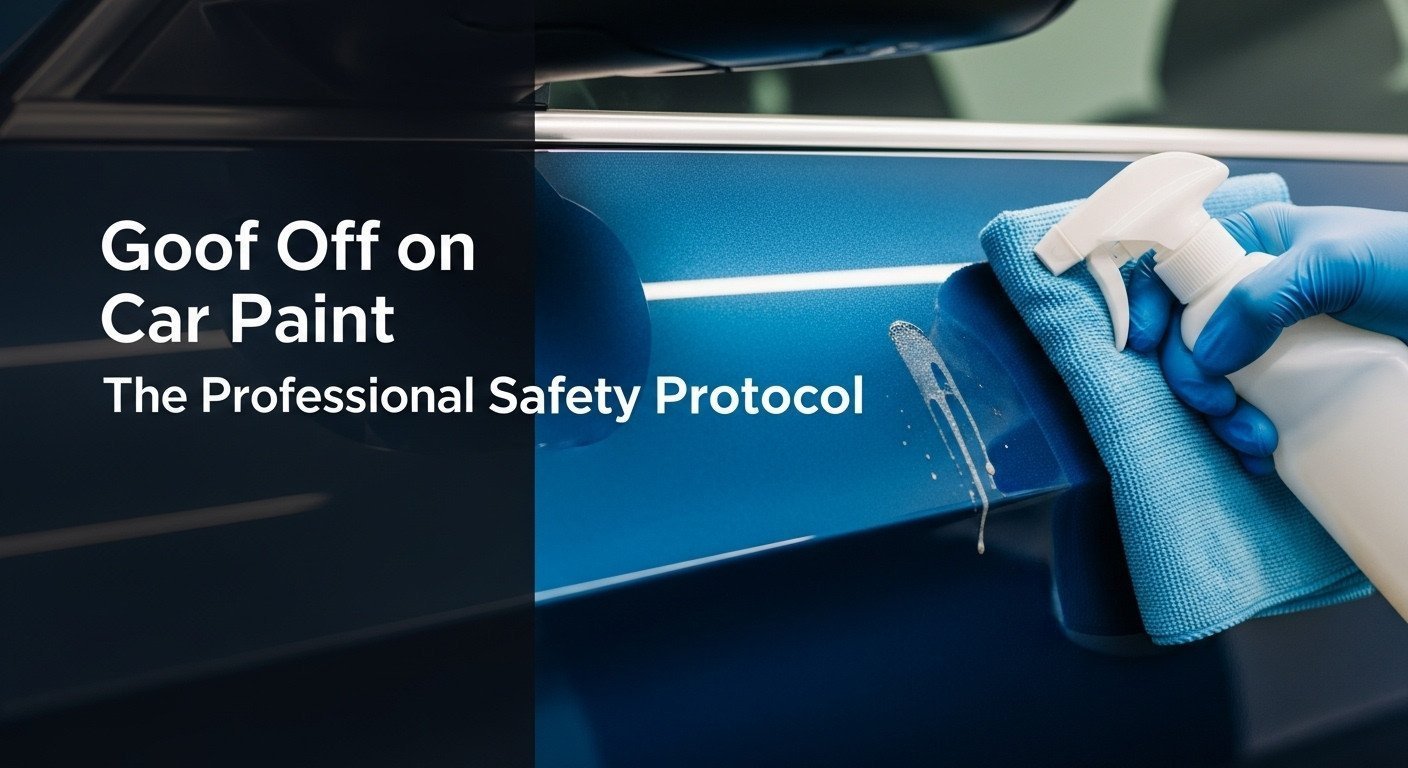
How to Use Goof Off More Safely on a Car
If the exact Goof Off product is explicitly intended for the automotive surface and contamination you are treating, use the smallest practical amount and follow the current label exactly. Do not improvise a longer soak time because the residue is stubborn.
Before treating a visible area, clean loose dirt from the surface. Dirt and grit can create scratches when you wipe. Choose a small inconspicuous test area and watch for changes in color, gloss, or texture before proceeding.
Use a clean, soft cloth or the applicator specified by the product instructions. Work on a small section instead of covering an entire panel at once. Remove the product according to the label and inspect the surface before moving on.
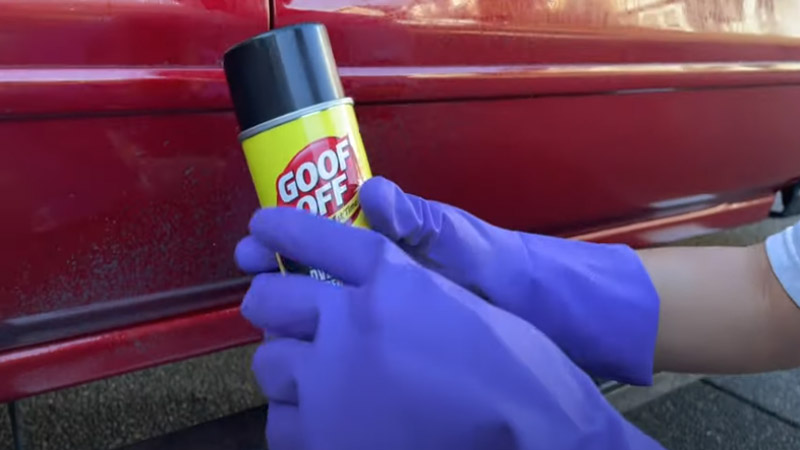
For products that require protective equipment, use the recommended gloves and eye protection. Solvent products should also be used with adequate ventilation and kept away from flames, sparks, cigarettes, and other ignition sources.
Source: storage.googleapis.com
1. Identify the exact product
Confirm that the formula is intended for the automotive surface and job you are performing.
2. Clean loose contamination
Remove dirt and grit first so wiping does not create unnecessary scratches.
3. Test a hidden spot
Apply a small amount to an inconspicuous area and check the finish for an unwanted reaction.
4. Use minimal exposure
Apply only the amount and contact time specified by the product directions.
5. Wipe gently
Use a clean appropriate cloth and avoid abrasive scrubbing.
6. Clean and inspect
Remove remaining product as directed, allow the area to dry, and compare it with untreated paint.
What Counts as a Successful Test?
A successful test means the target residue is removed without an unwanted change to the vehicle’s finish. The paint should not become visibly dull, cloudy, sticky, discolored, or otherwise different from the surrounding area.
If the test produces a negative reaction, stop. Do not assume that applying more product or rubbing harder will solve the problem.
Residue removed
The intended contaminant comes away without excessive force.
No visible finish change
The treated area remains visually consistent with nearby paint.
No unusual surface feel
The coating does not become soft, tacky, swollen, or rough.
Safer Alternatives for Common Car Residue
If your goal is routine car cleaning rather than removing a difficult paint overspray problem, an automotive-specific cleaner is usually the more controlled starting point. The right product depends on what is actually stuck to the paint.
For tar, road film, adhesive residue, tree sap, or similar contamination, choose a product whose label specifically identifies automotive paint or exterior vehicle surfaces. Using a purpose-built automotive formula reduces the guesswork compared with reaching for a general heavy-duty solvent.
For loose dirt and ordinary grime, start with automotive soap and water. For small bonded contaminants, other detailing methods may be appropriate, but stronger chemicals should not be the first step simply because they work faster.
The safest approach is to match the remover to the contaminant. A product designed to remove automotive tar is a better starting point for tar than a general paint remover designed for a completely different job.
Source: garagesee.com
Regular dirt
Use automotive soap and water rather than a strong solvent.
Tar and road grime
Choose an automotive tar or adhesive remover whose label permits use on the vehicle’s painted surface.
Sticker residue
Use a remover specifically labeled for automotive painted surfaces and test first.
Paint overspray
Consider a product specifically designed for automotive overspray and follow its restrictions for fully cured OEM finishes.
Unknown contamination
Identify the material before selecting a solvent, especially if the paint is valuable, repaired, wrapped, or unusual.
Why Stronger Is Not Always Better
A stronger solvent may remove contamination quickly, but that does not make it safer for automotive paint. The goal is selective cleaning: dissolve or loosen the unwanted material while leaving the vehicle’s finish intact.
This is why professional refinishing work relies on surface-specific materials and controlled testing. A solvent can be useful for one coating and overly aggressive for another.
Match chemistry to the job
Choose a remover designed for the type of contamination and surface involved.
Protect the finish
Avoid unnecessarily strong chemicals when a purpose-built automotive cleaner can perform the task.
Common Mistakes That Can Increase Paint Damage
Most preventable problems come from treating a solvent like ordinary car soap. Solvent removers are not products to spread freely across an entire vehicle without checking their intended surface and exposure limits.
Another common mistake is using more pressure when the contaminant does not disappear immediately. If a solvent has already softened a coating, aggressive rubbing can add physical damage on top of the chemical exposure.
It is also risky to mix cleaning chemicals. Combining products can create unpredictable reactions or produce stronger fumes. Use one compatible product at a time and follow its instructions rather than trying to create a stronger homemade cleaner.
Finally, do not assume a successful result on one car means the same product is safe for another. Factory paint, aftermarket paint, single-stage finishes, clear-coated finishes, wraps, plastics, and recently repaired panels can respond differently.
Source: paintingsboss.com
Using the wrong Goof Off formula
A product suitable for one surface may be unsuitable for painted automotive surfaces.
Leaving it on too long
Extra dwell time can increase chemical exposure without improving the final result.
Scrubbing aggressively
Hard rubbing can create or worsen surface damage, especially if the coating has softened.
Skipping a test spot
A small test can reveal an unwanted reaction before a large visible area is affected.
Ignoring safety equipment
Solvent removers can present eye, skin, vapor, and flammability hazards, so follow the product’s safety directions.
Mixing chemicals
Do not combine solvents or cleaners unless the manufacturer specifically instructs you to do so.
When You Should Stop and Call a Professional
Stop DIY treatment if the paint has become visibly damaged or if you cannot identify the coating or chemical involved. A professional detailer or automotive body shop can determine whether the problem is limited to surface protection or involves the clear coat, base coat, or underlying repair.
Professional help is especially sensible when the affected area is large, the vehicle has a recent repaint, the paint is peeling or bubbling, or the finish has changed dramatically after chemical exposure.
Large affected area
A large section of damaged paint is harder to correct safely with trial-and-error cleaning.
Recent repaint
Recently repaired or refinished surfaces may have different curing and solvent-resistance characteristics.
Visible coating failure
Peeling, bubbling, severe wrinkling, or exposed underlying layers warrant professional inspection.
Goof Off Car Paint Safety Checklist
Before using any Goof Off product on a vehicle in the United States, take a few minutes to verify the product, surface, and task. This simple check can prevent a small residue problem from becoming a paint repair problem.
If the label does not clearly support the intended automotive use, choose a product specifically designed for the surface instead. When the finish is unusual or valuable, getting professional advice before applying a strong solvent is often cheaper than correcting damaged paint.
Source: storage.googleapis.com
Confirm the exact formula
Identify the complete product name and read the current label.
Confirm the surface
Make sure the instructions cover the specific automotive surface you plan to treat.
Confirm the paint condition
Be more cautious with fresh repairs, damaged finishes, aftermarket coatings, wraps, and sensitive trim.
Test first
Use a small inconspicuous area before treating a visible section.
Use minimal contact
Follow the label’s application and contact-time instructions exactly.
Protect yourself
Use the required gloves and eye protection and provide adequate ventilation.
Keep away from ignition
Many solvent products are flammable, so keep them away from flames, sparks, heat sources, and smoking materials.
Stop at the first bad reaction
Dullness, haze, tackiness, discoloration, or texture changes are reasons to stop and reassess.
A Simple Decision Guide
If you are dealing with ordinary dirt, start with car soap. If you have tar, adhesive, or sap, select an automotive-specific remover labeled for that surface. If you have dried paint overspray, use a product specifically intended for automotive overspray and verify that the vehicle’s finish meets the stated requirements.
If the product is a general heavy-duty remover and the label does not clearly approve the painted automotive surface, do not use it as a shortcut. The small amount of time saved may not justify the risk of damaging the finish.
Ordinary dirt
Use automotive soap and water.
Sticky residue
Use a purpose-built automotive residue remover.
Dried overspray
Use an automotive overspray product only when its directions match the vehicle’s surface and curing condition.
Uncertain chemical or finish
Do not guess; seek product-specific or professional guidance.
Frequently Asked Questions
Q
Will Goof Off remove clear coat from a car?
It can damage or affect some automotive finishes, depending on the formula and exposure. Goof Off Pro Strength is not recommended for painted automotive surfaces, while the dedicated Overspray Remover has specific automotive uses on fully cured OEM surfaces.
Q
Can I use Goof Off Pro Strength on car paint?
It should not be treated as a safe general-purpose car-paint cleaner. Product guidance warns that Pro Strength can damage some automotive paints and recommends against using it on painted automotive surfaces.
Q
What should I do if I already put Goof Off on my car?
Stop applying the product, remove it according to its label, and wash the area with automotive-safe soap and water when appropriate. Let the surface dry and check for dullness, haze, tackiness, discoloration, or texture changes.
Q
Is Goof Off Overspray Remover safe for car paint?
It is specifically designed for certain automotive overspray problems and fully cured OEM surfaces. It is not a universal cleaner, so follow the label and do not use it on surfaces the directions exclude, such as raw plastic or freshly painted surfaces.
Q
Can Goof Off damage a car’s clear coat?
Yes, some formulas can affect clear coat or other automotive finishes. Risk depends on the exact formula, exposure, and condition of the coating, so always follow product-specific directions and test first.
Q
What is safer than Goof Off for removing residue from car paint?
For routine contamination, start with automotive soap and water. For tar, sap, adhesive, or overspray, choose a remover specifically labeled for automotive paint and the particular contamination instead of using a general heavy-duty solvent.
✦ Wrapping Up
Conclusion
So, will Goof Off damage car paint? It can, but the answer depends on which Goof Off product you mean. The brand includes multiple formulas with different intended uses, and a strong general-purpose remover should not be assumed safe simply because it works well on other hard surfaces.
The safest approach is to identify the exact formula, read its current surface directions, test a small hidden area, use minimal exposure, and stop immediately if the finish changes. For routine automotive cleaning, a product specifically designed for the vehicle’s paint and the contamination you are removing is usually the more controlled option.
If you have already used an unsuitable Goof Off product, gentle cleanup and careful inspection are better than immediately applying another strong chemical. When the paint is visibly softened, cloudy, peeling, bubbling, or severely discolored, professional automotive paint or body-shop advice is the safer next step.
💡 Key Takeaway
Do not judge Goof Off by the brand name alone. Check the exact formula and label, test first, use the least aggressive suitable product, and stop at the first sign of a paint reaction.
2 thoughts on “Will Goof Off Damage Car Paint? Comprehensive Safety Guide”





2 thoughts on “Will Goof Off Damage Car Paint? Comprehensive Safety Guide”