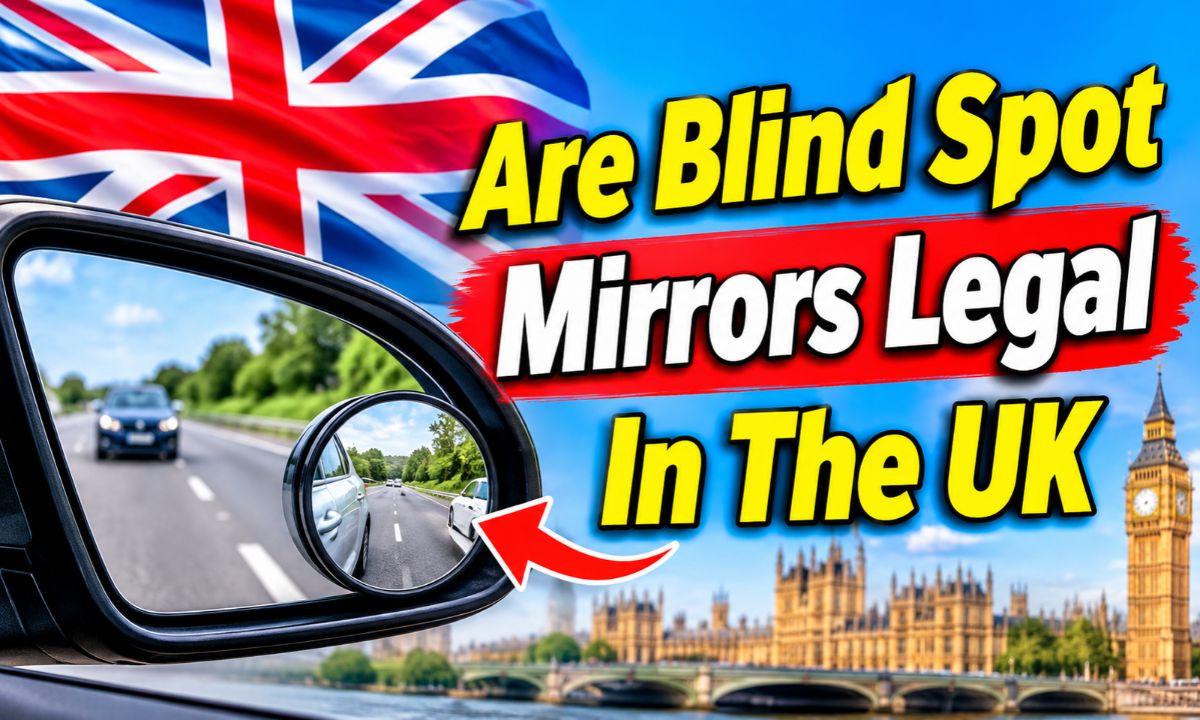
Yes, additional blind spot mirrors are generally legal in Great Britain, provided they do not interfere with required mirrors, visibility, or vehicle safety.
Drivers in the United States often add small convex mirrors to their side mirrors to see vehicles hiding beside their cars. Drivers in the United Kingdom use similar accessories, especially when driving through busy towns, narrow streets, and crowded motorways. These small mirrors can provide a wider view of nearby traffic, but drivers should understand the rules before fitting them.
So, are blind spot mirrors legal in the UK? Generally, yes. There is no blanket ban on fitting an additional blind spot mirror to a car. However, UK vehicle rules cover the mirrors fitted to a vehicle, including certain requirements for their construction, position, stability, and performance. An extra mirror should not obstruct the driver’s view or replace a required mirror with an unsuitable one.
The main legal framework in Great Britain is Regulation 33 of the Road Vehicles (Construction and Use) Regulations 1986. It covers mirrors and other devices used to provide an indirect view of the road. The Driver and Vehicle Standards Agency also provides MOT guidance on required mirrors and visibility.
This guide explains what the rules mean for ordinary drivers, where to fit an extra mirror, whether stick-on mirrors can cause MOT problems, and what to check before driving. The focus is on practical guidance rather than assuming that every mirror sold online meets UK requirements.
Yes, drivers can generally use additional blind spot mirrors on cars in Great Britain. These small mirrors are often attached to the glass of an existing wing mirror. They provide another angle of view and can help drivers see vehicles that might otherwise remain hidden.
The important distinction is between an extra mirror and a required vehicle mirror. UK law sets requirements for the mirrors that a vehicle must have. It also covers mirrors that are fitted even when they are not legally required. This means an additional mirror should not be treated as completely free from safety requirements.
Regulation 33 of the Road Vehicles (Construction and Use) Regulations 1986 is the main legislation to understand. It covers mirrors and other devices for indirect vision. Its provisions address the number and type of mirrors required for different vehicles, as well as applicable standards for mirrors that are fitted.
For an ordinary driver, this means a small, properly secured convex mirror is not automatically illegal because it is an aftermarket accessory. The important question is whether its fitting and use comply with the relevant vehicle requirements and preserve a clear, useful view.
The rules can differ according to vehicle type, date of first use, and whether the vehicle has special approval. A car, a large goods vehicle, and a passenger-carrying bus should not all be assessed using exactly the same mirror requirements.
Source: magnumvs.co.uk
Extra mirrors are generally permitted
A driver can usually add a small blind spot mirror to improve the view beside the vehicle.
Required mirrors still matter
An extra convex mirror does not remove the need to keep the original required mirrors in place and working.
Safe fitting is essential
A loose, badly positioned, or obstructive mirror can create a safety or compliance problem.
What Does Regulation 33 Say About Car Mirrors?
Regulation 33 sets out mirror requirements for different classes of motor vehicles. It explains which mirrors must be fitted and the standards that apply to them. It also covers the treatment of additional mirrors, rather than limiting its scope to factory-fitted equipment.
The regulation includes requirements relating to mirror stability, driver visibility, adjustment, and certain physical dimensions. For example, relevant exterior mirrors must remain steady under normal driving conditions. An exterior mirror must also be visible to the driver from the normal driving position through an appropriate window or the swept area of the windscreen.
This does not mean that every small stick-on mirror must meet the same approval standard as a main exterior mirror in every situation. The applicable requirements depend on the vehicle and the legal category of the mirror. When in doubt, choose a suitable automotive mirror and check its intended use.
Vehicle category
The required mirror arrangement depends partly on whether the vehicle is a car, bus, goods vehicle, or another type.
Mirror condition
Required mirrors must provide the necessary view and remain properly secured.
Applicable standards
The relevant technical requirements depend on the mirror’s role and the vehicle’s legal classification.
Does the Rule Apply to Stick-On Convex Mirrors?
Stick-on convex mirrors are among the most common types of blind spot accessories. They usually have a curved reflective surface and an adhesive backing. Some models are round, while others are rectangular or adjustable.
Their additional function does not automatically make them illegal. However, an exterior accessory should be fitted securely and should not compromise the operation or effectiveness of the original mirror. A mirror that moves in the wind or falls away from its mounting is not a good choice.
Before buying one, check that it is designed for exterior automotive use. A household mirror or an unsuitable adhesive product may not withstand rain, heat, vibration, and regular washing.
Adhesive quality
Use an automotive-grade adhesive that is suitable for exterior conditions.
Adjustable design
A model that allows angle adjustment can make it easier to direct the view towards the intended blind spot.
Original mirror access
Keep the factory mirror’s useful viewing area clear and avoid covering important parts of its reflective surface.
What Are the UK Legal Requirements for Vehicle Mirrors?
UK mirror rules are designed to make sure drivers can see the road and traffic around their vehicles. They do not simply ask whether a car has a certain number of mirrors. The position, type, condition, and function of the required mirrors also matter.
The exact requirements depend on the vehicle. For ordinary passenger cars, the rules take account of the vehicle’s date of first use. Older vehicles can have different requirements from newer vehicles. Large vehicles may also need additional mirrors or indirect vision devices to cover areas that are difficult to see from the driving position.
The Department for Transport publishes guidance called Rear-view mirrors on motor vehicles. It explains the general requirements for cars, buses, dual-purpose vehicles, and goods vehicles in Great Britain. Regulation 33 provides the underlying legal framework.
One important point is that a mirror must give a useful view. Simply attaching an extra mirror does not make an unsuitable arrangement legal. A driver must still be able to use the required mirrors as intended.
Source: cms-img.coverfox.com
Required mirror positions
The vehicle must have the required rear and side viewing arrangements for its class and date of first use.
Secure mounting
Applicable mirrors must remain stable under normal driving conditions.
Driver visibility
Exterior mirrors must be positioned so the driver can see them from the normal driving position.
Safe dimensions
Relevant exterior mirror projections and construction must comply with the applicable rules.
Which Mirrors Must a Normal UK Car Have?
Most modern passenger cars have three main mirrors: one interior rear-view mirror and two exterior wing mirrors. The interior mirror gives a view through the rear window, while the two exterior mirrors provide views along the sides of the vehicle.
However, the legal requirements are not identical for every car. The date of first use matters, and some vehicles may have approved camera-based indirect vision systems. A vehicle with no useful rear view through its interior mirror may also need a different exterior mirror arrangement.
The GOV.UK rear-view mirror guidance provides a table showing the required mirror positions for different vehicles. Drivers who own older cars should check the relevant row rather than assume that every vehicle follows the same rule.
An additional blind spot mirror is not a substitute for any of these required viewing arrangements. It is an extra aid that works alongside the main mirrors.
Interior rear-view mirror
Provides a view behind the car through the rear window when that view is available.
Offside wing mirror
Provides a view along the right-hand side of a typical UK right-hand-drive car.
Nearside wing mirror
Provides a view along the left-hand side of the car.
Does the Law Cover Northern Ireland?
There is an important difference between Great Britain and the whole United Kingdom. The Road Vehicles (Construction and Use) Regulations 1986 discussed in this guide apply to England, Scotland, and Wales.
Northern Ireland has its own road traffic and vehicle regulations. Drivers there should check the relevant Northern Ireland rules and guidance from the Driver and Vehicle Agency before relying on a conclusion based solely on Great Britain legislation.
The practical safety advice remains useful across the UK: keep required mirrors in place, make sure they provide a clear view, and avoid fitting an extra mirror in a way that obstructs vision.
Great Britain
Regulation 33 of the Road Vehicles (Construction and Use) Regulations 1986 is the main reference.
Northern Ireland
Check the separate Northern Ireland vehicle rules and DVA guidance for the relevant requirements.
Can Blind Spot Mirrors Cause an MOT Failure?
A properly fitted additional blind spot mirror does not automatically cause an MOT failure. The main concern is whether the required mirrors and the driver’s view meet the inspection standards.
The Driver and Vehicle Standards Agency publishes an MOT inspection manual for cars and passenger vehicles. Its visibility section explains how testers assess the driver’s field of vision, glass condition, and view to the rear.
During the MOT, the tester checks that all mandatory rear-view mirrors or indirect vision devices provide an adequate view from the driver’s seat. The inspection also considers whether the required exterior mirrors can be seen and whether their condition affects their function.
An extra mirror may not be the focus of the inspection, but its position can still matter. For example, a poorly fitted accessory that hides part of a required mirror or creates a serious obstruction could cause a problem.
The safest approach is to treat an additional mirror as an optional aid, not as a way to alter or avoid the required mirror arrangement.
Source: jeepcorner.com
Usually acceptable
A secure extra mirror that does not interfere with required mirrors or visibility is unlikely to cause an MOT issue simply because it is fitted.
Potential obstruction
An accessory that significantly affects the driver’s view may create an inspection or road safety concern.
Required mirror damage
A damaged, insecure, or ineffective obligatory mirror can lead to an MOT defect.
What Does the MOT Manual Say About Extra Mirrors?
The MOT manual distinguishes between required mirrors and additional items. It states that additional interior mirrors and externally mounted items such as mascots and spare wheels are not part of the relevant field-of-vision test. This is useful when considering a small accessory, but it should not be read as a general exemption from road vehicle laws.
The manual also says that testers must check the required rear-view mirrors or indirect vision devices to make sure they provide an adequate view. If an obligatory external mirror is not visible or the driver’s view is seriously affected, the vehicle may receive a defect.
The inspection is about the vehicle’s required equipment and its condition. It does not mean every aftermarket mirror has been independently approved or that every installation is automatically safe.
Clear rear view
The required mirrors must provide an adequate view towards the rear.
Visible exterior mirrors
The driver must be able to see the required external mirrors from the driving position.
No serious obstruction
An accessory must not seriously restrict the driver’s view of the road.
What Should You Check Before an MOT?
Before taking the car for its MOT, sit in the driving seat and check every mirror. Make sure the main mirrors are present, secure, clean, and correctly positioned. Look for cracks, loose mounts, and any damage that affects the reflected image.
Check the additional blind spot mirror too. It should not be hanging loose, covering a useful section of the original mirror, or creating an obstruction. If it has become loose or damaged, remove or refit it before the test.
If you are unsure whether an unusual mirror installation meets the requirements for your vehicle, ask an MOT testing station or a qualified vehicle inspection professional to assess it.
Clean the glass
Remove dirt, water marks, and other material that affects the view.
Check the mounting
Make sure the mirror does not move or shake during normal use.
Check the original mirror
Confirm that the main mirror remains useful and unobstructed.
Review the driver’s view
Sit normally and check that the accessory does not create a significant visual obstruction.
Where Should You Fit a Blind Spot Mirror on a UK Car?
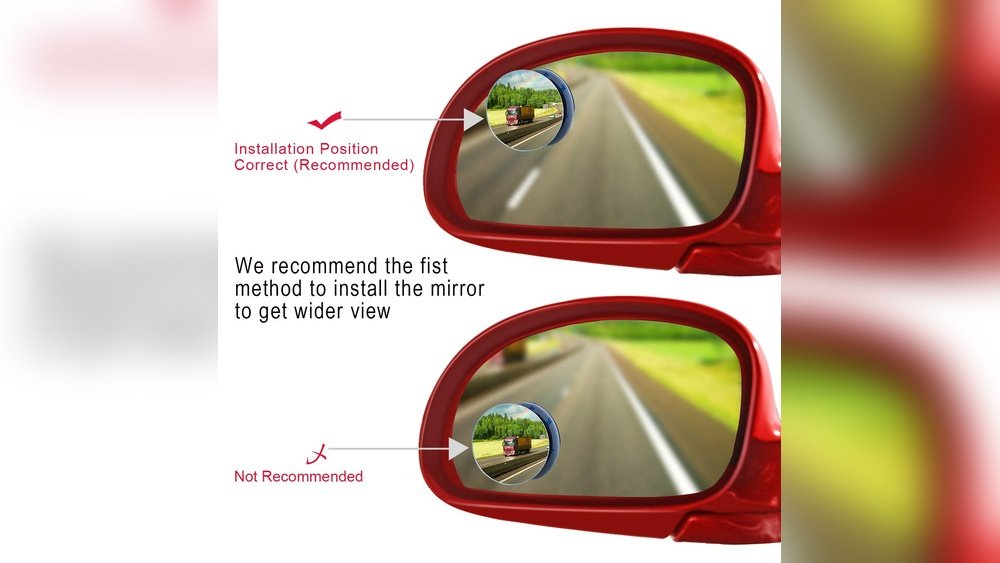
For most cars, the usual position is near the outer edge of the existing wing mirror. This can help the driver see traffic travelling beside the vehicle, especially in the area that the main mirror does not cover.
There is no single placement that works perfectly for every car. The shape of the wing mirror, the driver’s seating position, and the curvature of the extra mirror all affect the final view.
The goal is to add a useful viewing angle without hiding the original mirror’s main field of vision. A small change in position can make a noticeable difference, so check the view from the driver’s seat before fixing the mirror permanently.
Drivers in the UK should also consider road conditions. Narrow roads, parked cars, cyclists, and motorcyclists can make side visibility especially important. A correctly positioned mirror may help reveal nearby traffic, but it cannot show every area around the car.
Source: axioma.co.uk
Near the outer edge
This position can provide a wider view towards traffic beside the vehicle.
Avoid the main viewing area
Do not cover the part of the original mirror that you rely on for ordinary driving.
Check both sides
Drivers may benefit from extra visibility on either side, depending on their vehicle and driving needs.
How to Install a Stick-On Blind Spot Mirror
Installing a stick-on mirror is usually a simple task. Still, careful preparation matters because poor adhesion can cause the accessory to fall off while driving.
Before installation, check the product instructions and make sure the mirror is suitable for your existing wing mirror. Avoid fitting it to cracked, loose, or badly damaged glass.
Follow these steps for a typical adhesive-backed model.
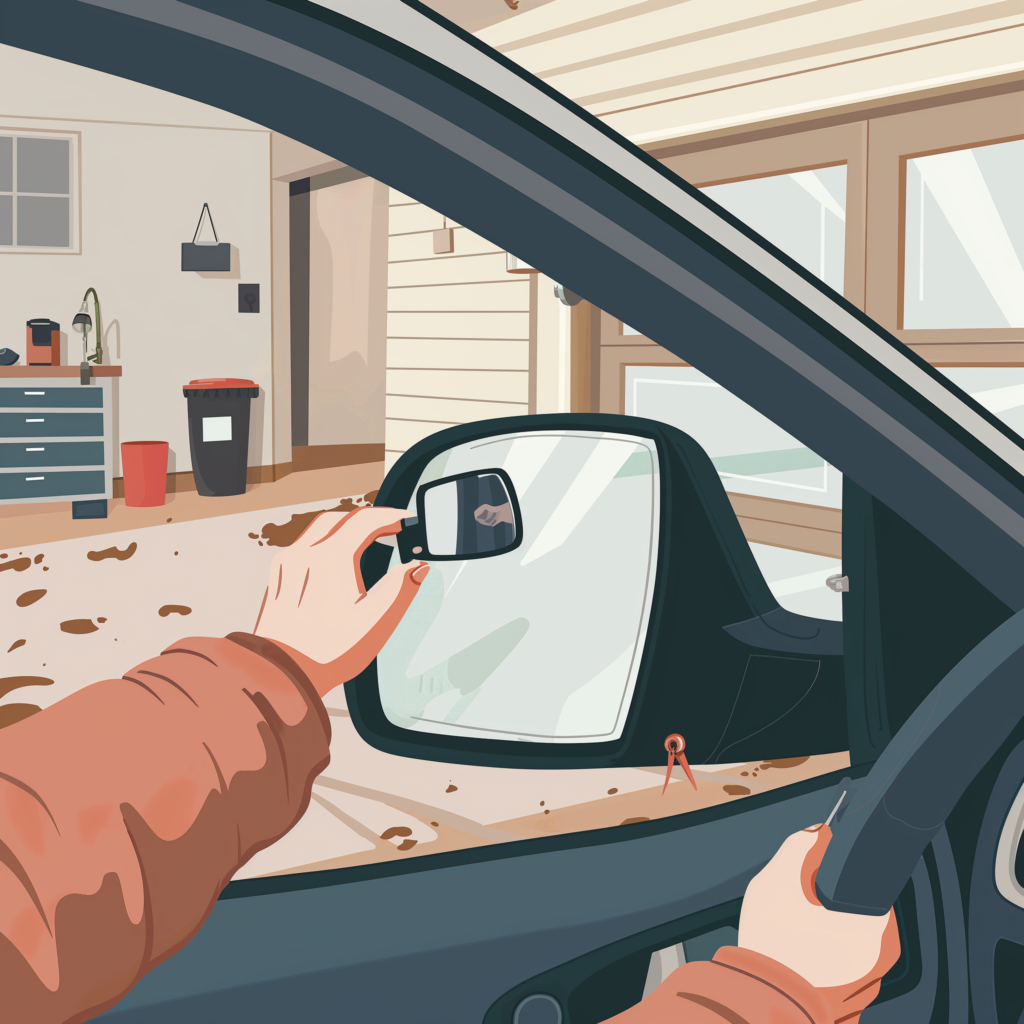
First, clean the wing mirror glass with a suitable glass cleaner. Remove dust, oil, road grime, and moisture. Allow the surface to dry fully before applying the adhesive.
Next, sit in the normal driving position and hold the extra mirror near the proposed location. Adjust it until you can see the intended area beside the vehicle without losing a useful view from the original mirror.
Once the position is right, follow the manufacturer’s instructions for removing the backing and pressing the mirror into place. Apply even pressure and allow the adhesive to set for the recommended time.
Finally, check the mirror again from the driver’s seat. If it moves, gives a distorted view, or hides too much of the original mirror, adjust or remove it before driving.
Step 1: Prepare the surface
Clean and dry the original wing mirror so the adhesive can bond properly.
Step 2: Test the position
Hold the extra mirror in place and check the view from your normal seating position.
Step 3: Attach the mirror
Apply it according to the product instructions and avoid touching the adhesive.
Step 4: Check the view
Confirm that the extra mirror shows useful nearby traffic without hiding the main mirror.
Step 5: Check the mounting
Make sure the mirror is firmly attached before taking the car onto the road.
How Can You Tell If the Mirror Is Positioned Correctly?
A correctly positioned blind spot mirror should show an area that is not already easy to see in the main wing mirror. You should be able to understand the image without constantly moving your head or changing your seating position.
Convex mirrors make objects appear smaller and often seem farther away than they really are. This is normal for a wide-angle mirror, but it means you should not use the image to judge a vehicle’s exact distance or speed.
Check the mirror while the car is stationary in a safe place. If the view is confusing, points towards the car body, or misses the area you intended to cover, adjust its angle.
Useful extra coverage
The mirror should show an additional area beside the vehicle.
Clear image
The reflection should be easy to interpret without excessive distortion.
Stable position
The mirror should remain firmly attached and correctly aligned.
Are Convex Blind Spot Mirrors Safe and Worth Using?
Convex blind spot mirrors can be useful because their curved surfaces show a wider area than many flat mirrors. They can help drivers notice cars, motorcycles, and other road users travelling beside their vehicles.
Their main benefit is improved awareness. For example, a driver preparing to change lanes on a motorway may notice a vehicle in the additional mirror that was not obvious in the main wing mirror.
However, the wider view comes with a trade-off. Objects can appear smaller and farther away, which may make it harder to judge their true distance. A vehicle that looks small in a convex mirror may be much closer than expected.
This is why a blind spot mirror should support the normal mirror-checking process rather than replace it. The driver still needs to use the main mirrors, signal when appropriate, and check the blind spot directly before moving.
The Highway Code explains this clearly. Rule 159 tells drivers to use all mirrors, look round to check blind spots, and make a final check before moving off. Rule 161 also explains that mirrors do not cover every area and drivers must look round when needed.
Source: m.media-amazon.com
Wider viewing angle
A convex surface can reveal more of the area beside the vehicle.
Better awareness
It may help drivers notice motorcycles, bicycles, and cars in nearby areas.
Distance distortion
Objects may appear smaller and farther away than they really are.
Not a replacement for head checks
Drivers must still check directly before changing lanes or moving off.
Can Blind Spot Mirrors Help When Driving on UK Motorways?
Yes, they may help drivers become more aware of traffic travelling alongside their vehicles. This can be useful on busy motorways where vehicles may move into nearby lanes quickly.
A blind spot mirror can provide another view of a car approaching from behind or travelling beside the vehicle. It may also help when a driver is preparing to move around slower traffic.
However, motorway lane changes still require a complete safety check. Check the main mirrors, use the additional mirror as a supporting view, signal when needed, and make a direct blind spot check before moving if it is safe to do so.
Do not make a sudden steering movement just because a vehicle appears small in the convex mirror. Allow enough space and time for other road users.
Lane changes
Use the extra mirror to gain more information about traffic beside the car.
Overtaking
Check that the intended lane is clear using all available views before moving out.
Traffic awareness
Keep checking mirrors regularly rather than waiting until you need to change lanes.
Are Blind Spot Mirrors Helpful for New Drivers?
They can be helpful for new drivers who are still learning how to judge the space around a vehicle. A wider view may make it easier to notice traffic that is not visible in the main wing mirror.
However, a new driver should learn the correct mirror and observation routine first. Relying too heavily on an extra mirror can create poor habits, especially if the driver stops checking over their shoulder.
Learners should practise using the main mirrors, checking blind spots, and making safe observations under the guidance of their driving instructor. An extra mirror can be useful, but it should not become a shortcut.
Learn the basics first
Understand the normal mirror-checking routine before adding another viewing aid.
Practise safe observations
Use direct checks and mirrors together when moving off or changing lanes.
Avoid overreliance
Never assume that an extra mirror shows every vehicle or road user.
Frequently Asked Questions
Q
Are stick-on blind spot mirrors legal in the UK?
Yes, stick-on blind spot mirrors are generally legal in Great Britain. There is no blanket ban on adding a small convex mirror to an existing wing mirror. However, the accessory must be fitted safely and must not interfere with the required mirrors or the driver’s view. Choose a suitable automotive product and check that it remains firmly attached.
Q
Can I drive with only blind spot mirrors instead of normal wing mirrors?
No. An additional blind spot mirror should not be treated as a replacement for the required main mirrors. UK vehicle rules specify the mirror arrangements needed for different vehicle types and ages. A small convex mirror is designed to provide an extra viewing angle, not to perform every function of a standard wing mirror.
Q
Will a blind spot mirror make my car fail its MOT?
A properly fitted additional mirror does not automatically cause an MOT failure. The tester checks the required mirrors and the vehicle’s visibility. Problems may arise if an accessory significantly obstructs the driver’s view or interferes with an obligatory mirror. Check the original mirrors, their condition, and the extra mirror’s mounting before the test.
Q
Can I put a blind spot mirror on both wing mirrors?
Yes, drivers can generally fit additional blind spot mirrors to both exterior mirrors. Doing so may provide a wider view on both sides of the car. Make sure each mirror is positioned correctly, does not cover an important part of the original mirror, and stays secure during normal driving.
Q
Do blind spot mirrors replace checking over my shoulder?
No. Blind spot mirrors provide extra information, but they cannot show every area around a vehicle. Convex mirrors can also make objects appear smaller and farther away. Follow the Highway Code by using your mirrors, checking blind spots directly, and making a final observation before moving when it is safe to do so.
Q
Are blind spot mirrors legal on vans and trucks in the UK?
Additional blind spot mirrors can generally be used on vans and trucks, but the requirements may be more detailed than those for ordinary cars. Vehicle type, weight, date of first use, and applicable mirror standards can affect the legal requirements. Large goods vehicles may need specific mirror classes or additional indirect vision devices. Check the requirements for the exact vehicle rather than assuming that ordinary car rules apply.
Q
Can a convex blind spot mirror distort the distance of other vehicles?
Yes. A convex mirror provides a wider viewing angle by curving its reflective surface. This makes objects look smaller and can make them seem farther away than they really are. Always use the main wing mirror and direct observations to help judge the position and movement of nearby traffic.
✦ Wrapping Up
Conclusion
Blind spot mirrors are generally legal in Great Britain, and drivers can usually add them to their existing wing mirrors to improve their view of nearby traffic. There is no general ban on small stick-on convex mirrors. However, their fitting and use must not compromise the vehicle’s required mirror arrangement or the driver’s ability to see the road.
Regulation 33 of the Road Vehicles (Construction and Use) Regulations 1986 provides the main legal framework for vehicle mirrors in Great Britain. The DVSA MOT inspection manual also explains the checks for required mirrors and visibility. These rules are worth understanding before changing your vehicle’s mirror setup.
Choose an exterior automotive mirror, attach it securely, and position it so that it provides a useful extra view without hiding the original mirror. Check its condition regularly, especially after heavy rain, vehicle washing, or extreme temperature changes.
Most importantly, never rely on a blind spot mirror alone. Use all your mirrors, check the blind spots directly, and make sure the road is clear before changing lanes or moving away. A small extra mirror can help you see more, but safe driving still depends on careful observation.
💡 Key Takeaway
Before fitting a blind spot mirror, check the relevant vehicle requirements, choose a suitable automotive-grade mirror, and position it without obstructing your original wing mirror. Test the view from the driver’s seat and continue to perform direct blind spot checks whenever you move off or change lanes.