
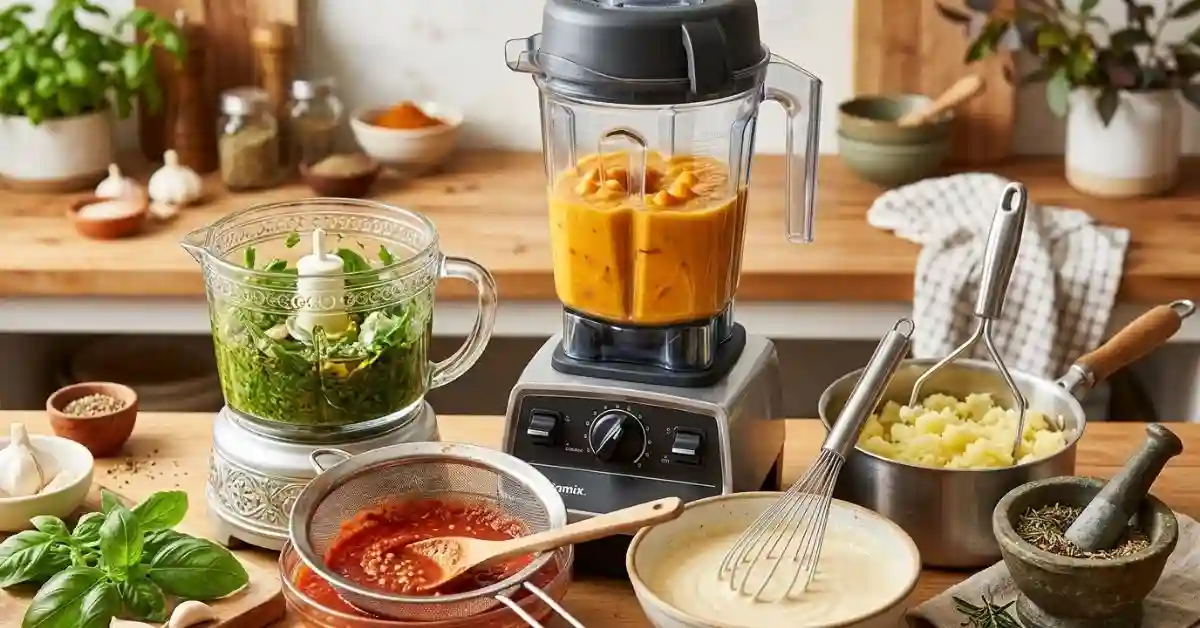
If you do not have an immersion blender, you can still make smooth soups, sauces, dips, and drinks. The best replacement depends on what you are blending and how smooth you want it.
I have found that the biggest mistake is looking for one tool that does everything an immersion blender does. A countertop blender, food processor, potato masher, whisk, or even a fork can work well in the right situation. The trick is choosing the tool that fits the job.
What Can I Use Instead of an Immersion Blender?
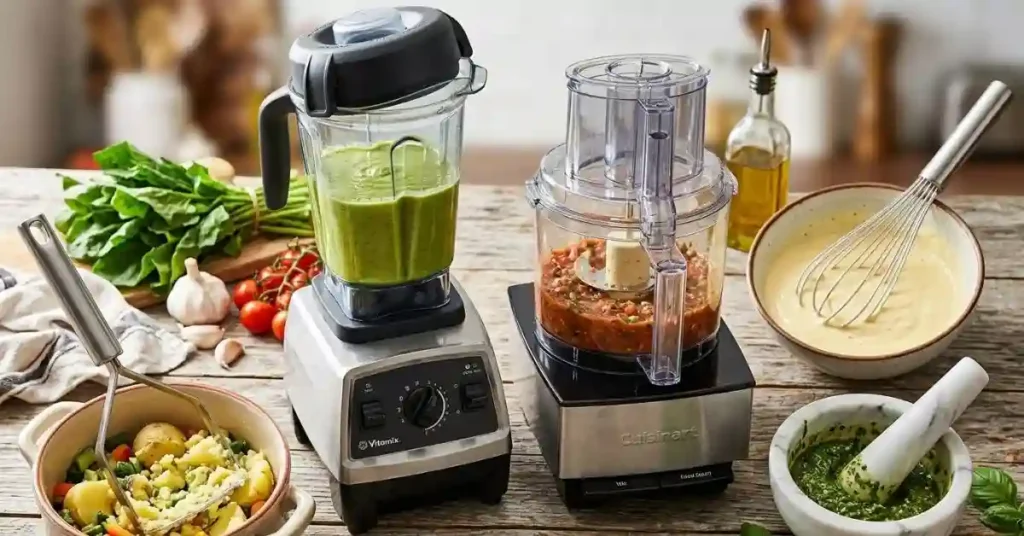
The best substitutes for an immersion blender are a countertop blender, food processor, potato masher, hand mixer, whisk, or fork. Each one works better for different foods.
For smooth soups and sauces, a countertop blender is usually the closest match. For chunky soups, a potato masher may be all you need. A food processor is useful for thicker foods, while a whisk works well for sauces that only need light mixing.
| Replacement | Best for | Result |
| Countertop blender | Soups, sauces, smoothies | Very smooth |
| Food processor | Dips, pesto, thick sauces | Smooth to chunky |
| Potato masher | Potatoes, beans, soft vegetables | Chunky |
| Whisk | Sauces, gravy, custard | Light and smooth |
The right choice also depends on how much food you need to blend. A small batch may be easier with a food processor or hand tool.
Can a Regular Blender Replace an Immersion Blender?
Yes, a regular countertop blender is often the best replacement for an immersion blender. In fact, it can give you a smoother result for many foods.
The main drawback is moving hot food from the pot to the blender. That extra step can be messy. It also means more dishes to wash.
Using a Blender for Hot Soup
Be careful with hot liquids. Hot soup can create steam and pressure inside a blender.
Let the soup cool a little if your blender instructions call for it. Blend in small batches. Keep the lid secure, and follow the blender maker’s safety instructions.
I would not fill the blender to the top with hot soup. That is one of those shortcuts that can turn a simple meal into a very messy kitchen.
| Situation | Blender choice |
| Cold smoothie | Regular blender |
| Warm soup | Use small batches |
| Very hot soup | Cool first if the manual says so |
| Small amount of sauce | Food processor may be easier |
Why a Blender Works So Well
A countertop blender has fast spinning blades. It can break down soft vegetables, cooked beans, fruit, and other soft foods into a smooth mix.
It is especially useful when you want a silky soup or sauce rather than a rustic texture.
Is a Food Processor a Good Immersion Blender Substitute?
A food processor is another strong option. I would choose it for thicker foods more often than for thin soups.
It works well for hummus, pesto, salsa, dips, cooked vegetables, and thick sauces. You can also use it to mash some foods without making them completely smooth.
One limitation is the shape of the bowl. It may not handle a small amount of liquid as well as a blender.
| Food | Food processor result |
| Hummus | Very good |
| Pesto | Very good |
| Salsa | Good |
| Thick sauce | Very good |
| Thin soup | Less convenient |
When a Food Processor Is Better
A food processor shines when the food is thick. Its wide bowl gives solid foods room to move around.
For example, if I wanted to make a thick bean dip, I would rather use a food processor than a whisk. The blades can break down the beans much faster.
Still, do not overfill it. Work in smaller batches when needed.
Can I Use a Potato Masher Instead of an Immersion Blender?
Yes. A potato masher is one of the simplest alternatives, especially when you do not need a perfectly smooth texture.
It works best with soft foods. Think cooked potatoes, beans, carrots, pumpkin, or other vegetables that have been cooked until tender.
The result will usually be thicker and more rustic than food made with a blender.
When a Potato Masher Makes More Sense
Sometimes smooth is not better.
For a chunky vegetable soup, mashed beans, or rustic potato dish, a potato masher can give you the texture you want. There is also less equipment to clean.
| If you want… | Try… |
| Very smooth soup | Countertop blender |
| Rustic soup | Potato masher |
| Mashed beans | Potato masher |
| Chunky vegetables | Potato masher |
The key is to cook the food until it is very soft first. A masher cannot do much with hard vegetables.
Can a Hand Mixer Replace an Immersion Blender?
A hand mixer can help with some foods, but it is not a direct replacement.
Hand mixers are made mainly for mixing and whipping. They are useful for mashed potatoes, soft mixtures, and some batters. They are not ideal for turning a pot of vegetables into a silky soup.
There is also a big difference between mixing and blending. A mixer can move food around well, but it does not always break food down into the same fine texture.
Use a Hand Mixer for Soft Foods
A hand mixer can work well when the food is already soft and mostly broken down.
For mashed potatoes, for example, it can make the mixture light and fluffy. But be careful not to overmix potatoes. Too much mixing can make them sticky.
| Food | Hand mixer |
| Mashed potatoes | Good |
| Whipped foods | Excellent |
| Soup | Not ideal |
| Smooth sauce | Usually not the best choice |
Can a Whisk or Fork Replace an Immersion Blender?
Sometimes, yes. A whisk or fork can be enough when you only need to combine ingredients rather than fully puree them.
This works well for gravy, cream sauces, dressings, eggs, and other foods that are already fairly smooth.
A fork is useful for tiny amounts. It is not a realistic substitute for a blender when you need to puree a whole pot of soup.
The Trick Is to Start With Soft Ingredients
A whisk cannot magically turn large chunks of carrot into a smooth puree. If the ingredients are already soft and small, though, it can do a good job of mixing them.
| Tool | Best small job |
| Fork | Small amounts |
| Whisk | Sauces and gravy |
| Potato masher | Soft vegetables |
| Blender | Smooth purees |
This is one place where people often make the job harder than it needs to be. If the recipe only asks you to mix ingredients, you may not need a powered tool at all.
What Can I Use Instead of an Immersion Blender for Soup?
For soup, a countertop blender is usually the best substitute when you want a smooth finish. A potato masher is better if you want some texture.
The choice comes down to the final texture.
If you are making tomato soup, pumpkin soup, or creamy vegetable soup, a blender can create a very smooth result. If you are making a hearty bean or vegetable soup, a masher can leave some pieces behind.
Best Tools for Different Soup Textures
| Soup texture | Best option |
| Silky smooth | Countertop blender |
| Mostly smooth | Food processor |
| Rustic and chunky | Potato masher |
| Lightly mixed | Whisk |
There is no rule that says soup has to be perfectly smooth. In many cases, a little texture makes the dish more enjoyable.
What Can I Use Instead of an Immersion Blender for Mashed Potatoes?
For mashed potatoes, you have several choices. A potato masher is the simplest. A potato ricer gives a very smooth texture. A hand mixer can make fluffy mashed potatoes if you use it gently.
A regular blender is usually not my first choice for potatoes. The blades can work the starch too much and leave you with a gluey texture.
My Preferred Order for Potatoes
If the goal is good mashed potatoes, I would think about the texture first.
| Desired texture | Good tool |
| Rustic | Potato masher |
| Smooth | Potato ricer |
| Fluffy | Hand mixer |
| Very processed | Avoid regular blender |
The important lesson is that the strongest motor is not always the best answer. Some foods need gentle handling.
What Can I Use Instead of an Immersion Blender for Sauces?
For sauces, your best replacement depends on the sauce.
A whisk works well for smooth sauces that mainly need mixing. A blender works better when you need to puree vegetables, herbs, or other solid ingredients.
A food processor is also useful for thick sauces such as pesto.
Match the Tool to the Sauce
| Sauce type | Best substitute |
| Gravy | Whisk |
| Cheese sauce | Whisk |
| Tomato puree | Blender |
| Pesto | Food processor |
| Thick dip | Food processor |
One useful habit is to chop ingredients as finely as possible before blending. Smaller pieces make almost every substitute work better.
What Are the Biggest Mistakes When Replacing an Immersion Blender?
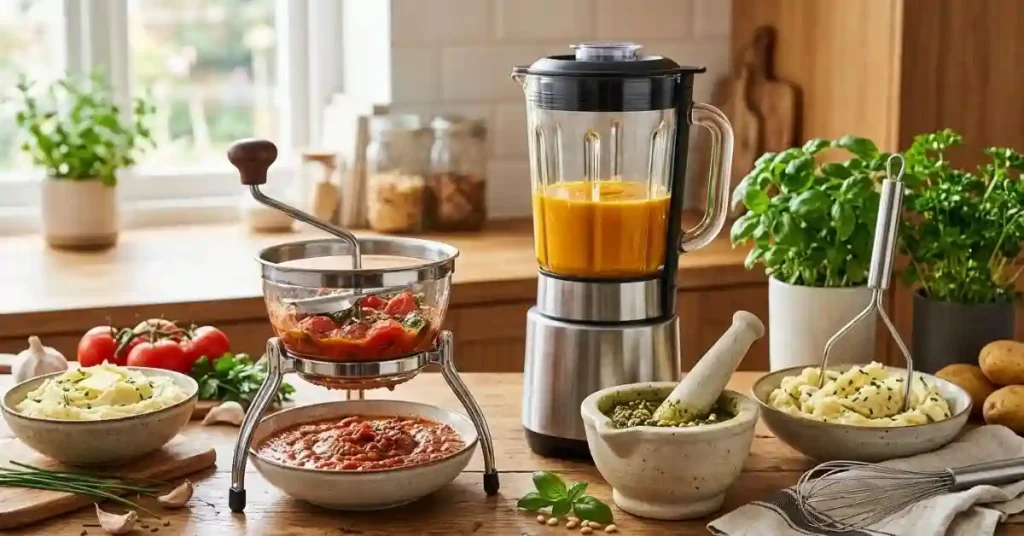
The most common mistake is expecting every substitute to give the same texture.
They will not. An immersion blender is convenient because you can blend food right in the pot. A countertop blender can make food very smooth, but it adds a transfer step. A masher is easy, but it leaves more texture.
Mistake: Using the Wrong Tool for the Texture
If a recipe says to blend until silky smooth, a fork is probably not the right choice.
If the recipe only needs a few soft ingredients mashed together, using a large blender may create extra work.
| Mistake | Better approach |
| Expecting a fork to puree soup | Use a blender |
| Blending hot food carelessly | Follow blender safety instructions |
| Using a blender for mashed potatoes | Try a masher or ricer |
| Overfilling a food processor | Work in smaller batches |
Mistake: Forgetting About Cleanup
This sounds minor, but it matters.
An immersion blender can often be rinsed and cleaned quickly. A countertop blender has a jar, lid, blade area, and base to deal with. A food processor can have even more parts.
When choosing a substitute, think about the whole task, not just the blending step.
Which Immersion Blender Alternative Is Best Overall?
If I had to choose just one replacement, I would pick a countertop blender for the widest range of smooth foods.
But there is no single winner for every recipe.
A potato masher is better for rustic soups. A whisk is better for gravy. A food processor is better for thick dips. A hand mixer is better for some mashed foods.
| Your main need | Best overall pick |
| Smooth soups | Countertop blender |
| Thick dips | Food processor |
| Mashed vegetables | Potato masher |
| Sauces and gravy | Whisk |
| Fluffy mashed potatoes | Hand mixer |
That is the practical way to think about it. Do not ask, “What replaces an immersion blender perfectly?” Ask, “What tool gives me the texture I need?”
Final Thoughts
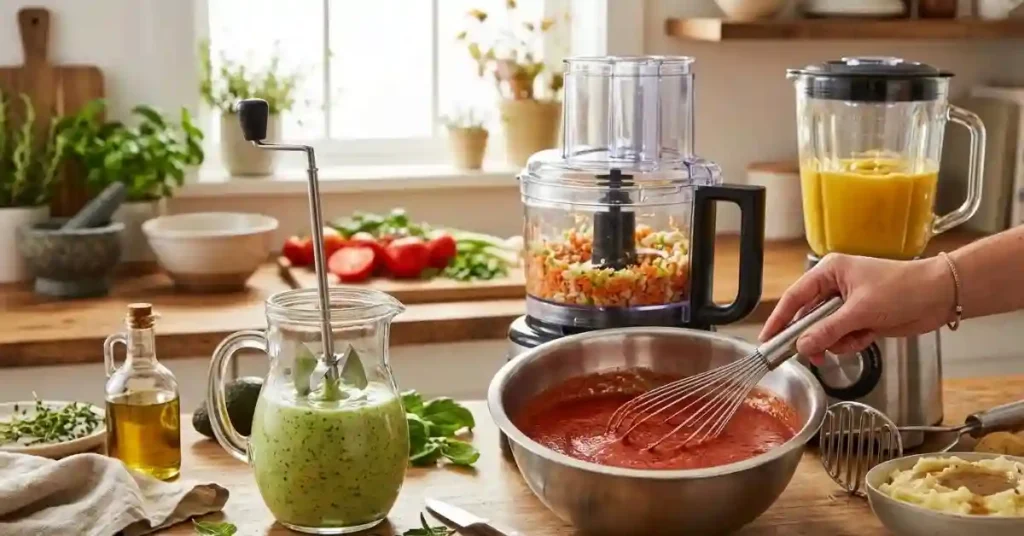
You do not need an immersion blender to make most recipes that call for one. A countertop blender is the closest all-purpose option, while a food processor, potato masher, whisk, or hand mixer can work better for certain foods.
The biggest lesson is to match the tool to the job. If you need silky soup, use a blender. If you want chunky texture, grab a masher. If you only need to mix a sauce, a whisk may be all you need. That simple choice can save time, cleanup, and a lot of frustration.
Frequently Asked Questions
What can I use instead of an immersion blender?
A regular blender is the best all-purpose swap. A food processor, potato masher, or whisk can also work, based on the food and the texture you want.
Can I use a regular blender instead of an immersion blender?
Yes. A regular blender works well for soups, sauces, and purees. Blend hot foods with care, use small batches, and follow your blender’s safety guide.
What is the best substitute for an immersion blender for soup?
A regular blender is best for smooth soup. Use a potato masher if you want a chunky soup. Let hot soup cool if your blender guide says to do so.
Can I use a food processor instead of an immersion blender?
Yes. A food processor works well for thick foods like hummus, pesto, dips, and sauces. It may not work as well for thin soups or small liquid batches.
Can I use a potato masher instead of an immersion blender?
Yes, for soft foods. A potato masher works well for potatoes, beans, and cooked veg. It gives a chunky, home-style texture rather than a smooth puree.
To Get More About Home, Home and Kitchen Product You Can Visit Our Site. If You Found our Posts Helpful Leave a Comment Below
1 thought on “What Can I Use Instead of an Immersion Blender? Easy Options”