
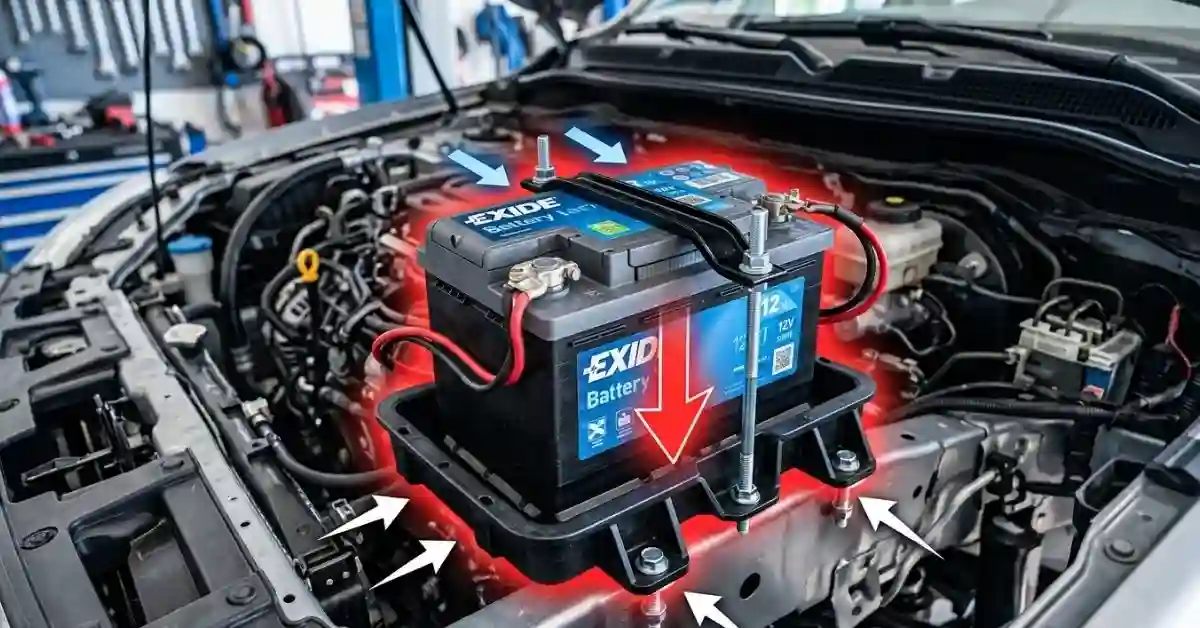
A battery tray looks like a small, basic part, but I learned that it does much more than hold a car battery in place. A good tray keeps the battery stable, protects nearby parts, and helps prevent damage from movement, leaks, and vibration.
When I first looked at battery mounting, I thought the battery hold-down did all the work. It does not. In this guide, I’ll explain How Does a Battery Tray Work, what it protects, how it differs from a battery box, and what to check when the tray starts to fail.
How Does a Battery Tray Work?
A battery tray works as the base that supports the battery inside the engine bay or another mounting area. It spreads the battery’s weight over a solid surface and gives the battery hold-down a stable place to secure it.
The tray also keeps the battery from sliding around. This matters because a car battery is heavy, and normal driving creates bumps, vibration, and sudden movement.
| Battery Tray Feature | Main Benefit |
| Solid base | Supports battery weight |
| Raised edges | Help stop battery movement |
| Mounting holes | Secure the tray to the vehicle |
| Hold-down points | Help clamp the battery in place |
How Does a Battery Tray Keep a Battery Stable?
The tray itself does not always clamp the battery. Instead, it gives the battery a firm base while a hold-down bracket, strap, or clamp keeps it down.
Think of it like a plate under a heavy object. The plate supports it, while another part stops it from moving.
I used to think a battery that felt tight was fine. Then I noticed how much a battery can move when the road gets rough. Even a small amount of movement can put stress on battery cables and terminals.
Why Does Battery Movement Matter?
A loose battery can rock or slide during driving. That movement can cause several problems.
| Problem | What Can Happen |
| Battery shifts | Cables may pull or rub |
| Battery vibrates | Case damage may occur over time |
| Battery is loose | Terminals may become stressed |
A proper tray and hold-down work together. You need both for a secure battery mount.
What Does a Car Battery Tray Protect?
A battery tray mainly protects the mounting area and helps keep the battery away from surfaces that could cause trouble. It can also catch small amounts of moisture or residue, depending on its design.
Lead-acid batteries can release corrosive material if they leak or vent. That is one reason the tray matters. Without a tray, acid or residue can reach painted metal and other nearby parts.
Does a Battery Tray Prevent Battery Acid Damage?
It can help contain minor leaks or residue, but it is not a complete acid shield.
The tray may protect the vehicle body underneath the battery. Still, a badly leaking battery can damage the tray itself and nearby parts.
| Tray Material | Common Benefit |
| Plastic | Resists corrosion and is light |
| Coated steel | Strong and durable |
| Stainless steel | Strong and highly corrosion resistant |
This is one area where I would not rely on the tray alone. If you see wet spots, crusty residue, or signs of a damaged battery case, find the cause instead of simply cleaning the tray.
Why Is a Battery Tray Needed?
A battery tray is needed because the battery needs a stable mounting surface. It also helps place the battery at the correct height and location.
Without a proper tray, the battery may sit directly against metal or another unsuitable surface. That can make securing it harder and may allow unwanted movement.
A tray can also make battery service easier. When the mounting points are in the right place, you can remove and install the battery without fighting the surrounding parts.
What Happens If a Battery Tray Is Missing?
A missing tray does not always cause an immediate problem. That can make the issue easy to ignore.
But the battery still needs proper support.
| Missing Tray Issue | Possible Result |
| Poor support | Battery can move |
| Wrong battery height | Hold-down may not fit well |
| Direct contact | Mounting area may be damaged |
| No spill protection | Corrosive residue can reach metal |
The biggest lesson here is simple: the battery should not just fit; it should be securely mounted.
Battery Tray vs Battery Hold-Down: What Is the Difference?
The battery tray and hold-down have different jobs, even though they work as one system.
The tray supports the battery from below. The hold-down keeps it from lifting or shifting.
| Part | Main Job |
| Battery tray | Supports the battery |
| Battery hold-down | Stops battery movement |
| Battery terminal | Connects battery to cables |
I have seen people focus on the hold-down and ignore the tray. That can be a mistake. A strong clamp cannot make up for a cracked, badly rusted, or loose tray.
How Does a Battery Tray Work With the Hold-Down?
The battery sits inside the tray. The hold-down then presses it against the tray.
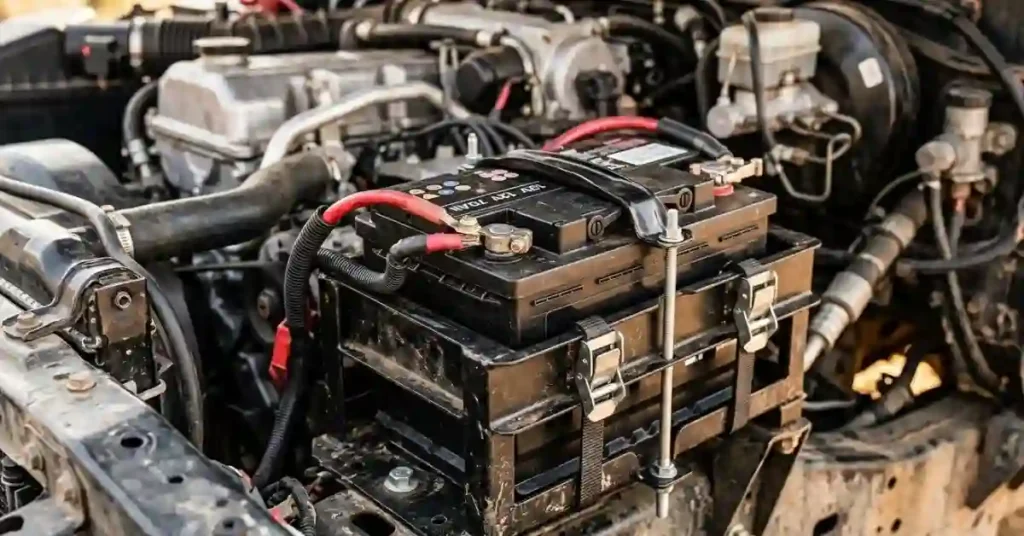
Some vehicles use a top bar. Others use a side clamp that grabs a lip on the battery.
The exact design changes from one vehicle to another, so the correct replacement should match the vehicle and battery size.
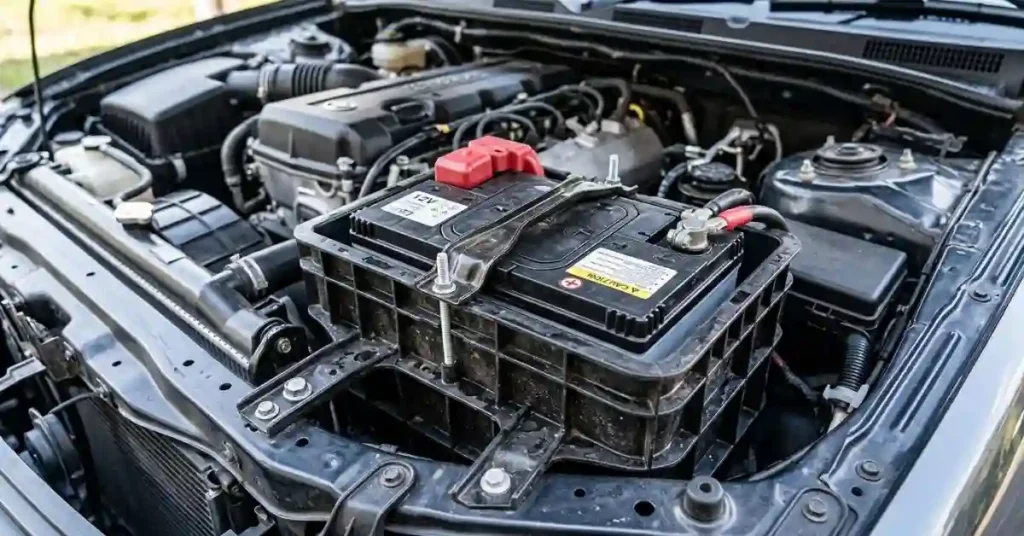
What Are the Signs of a Bad Battery Tray?
A damaged tray can be easy to spot if you know what to look for. I like to inspect it whenever I replace a battery because the old battery often hides damage underneath.
Look for cracks, rust, loose bolts, bent edges, and signs of corrosion.
| Sign | Likely Concern |
| Heavy rust | Tray may be losing strength |
| Cracks | Support may fail |
| Bent edge | Battery may not sit right |
| Loose mounting | Tray can move |
| Corrosion marks | Possible battery leak |
Can a Rusty Battery Tray Cause Problems?
Yes. Surface rust is not always serious, but deep rust can weaken the tray.
This matters even more if the mounting bolts or the metal around them are rusty. A tray may look fine at first glance but still have weak mounting points.
If I see deep rust, I do not treat it as a cosmetic issue. I check the tray, bolts, mounting surface, and hold-down before putting a battery back in.
How Do You Check a Battery Tray?
A quick inspection does not need many tools. The main goal is to check whether the tray is strong, secure, and clean.
Always follow the vehicle maker’s safety steps before working around the battery.
Step 1: Look Around the Battery
Check the tray edges and visible mounting points. Look for rust, cracks, bends, and broken plastic.
Step 2: Check for Movement
With the vehicle off and the battery properly secured, check whether the mounting system feels loose. Do not force the battery or pull on the cables.
Step 3: Inspect Under the Battery
This is often where the hidden damage lives. If you remove the battery, inspect the full tray and the metal below it.
Step 4: Check the Hold-Down
Make sure the clamp or bracket fits correctly. A tray can be fine while the hold-down is damaged.
| Check | What You Want to See |
| Tray surface | Solid and intact |
| Mounting bolts | Tight and secure |
| Hold-down | Firm and correctly fitted |
What Are Common Battery Tray Mistakes?
Most battery tray problems do not start with the tray itself. They often start with poor fitting, ignored rust, or the wrong battery size.
One mistake I would avoid is assuming that any battery tray will work because it looks close enough.
Mistake 1: Using the Wrong Tray
A tray needs to match the vehicle and battery setup. A poor fit can leave too much movement or prevent the hold-down from working correctly.
Mistake 2: Ignoring Rust
A little surface rust may not mean the tray needs replacement. Deep rust around mounting points deserves much more attention.
Mistake 3: Skipping the Hold-Down
The tray supports the battery. It does not replace the hold-down.
Mistake 4: Putting a New Battery on a Damaged Tray
This is an easy one to miss. A shiny new battery can distract you from an old, weak tray underneath.
| Mistake | Better Approach |
| Ignore deep rust | Inspect the full mounting area |
| Skip the hold-down | Secure the battery properly |
| Use a close-fit tray | Match the correct application |
| Hide tray damage | Fix the mounting issue first |
Does Every Battery Need a Battery Tray?
Not every battery setup uses a traditional tray. Some vehicles use molded battery bases, enclosed battery boxes, or other mounting systems.
The basic need is still the same: the battery needs proper support and restraint.
This is especially important with batteries mounted in trunks, cabins, boats, recreational vehicles, and custom setups. The mounting method may change, but the battery should still remain secure.
Is a Battery Tray the Same as a Battery Box?
No. A tray is usually an open support base. A battery box surrounds the battery more fully.
| Battery Tray | Battery Box |
| Usually open | More enclosed |
| Supports from below | Surrounds the battery |
| Common in engine bays | Common in special mounting areas |
A battery box may offer extra protection from spills or contact. A tray is often simpler and easier to access.

How Does a Battery Tray Work in Real-World Driving?
This is where the small details matter. A battery may sit still in a driveway but move much more on rough roads.
Vibration, bumps, heat, moisture, and corrosion all affect the mounting system over time.
I have found that battery service is a good time to check the tray. You already have access to the area, so it takes little extra effort to look underneath.
What Should You Check During Battery Replacement?
Before installing the new battery, I would check these areas:
- Battery tray condition
- Tray mounting bolts
- Hold-down bracket
- Battery fit
- Cable routing
- Terminal condition
- Signs of corrosion or leaks
This small check can save you from installing a new battery into a poor mounting setup.
How Can You Keep a Battery Tray in Good Shape?
Good battery tray care is mostly about catching problems early. You do not need to inspect it every week.
Check it during battery service and whenever you notice corrosion, battery movement, or unusual cable stress.
Simple Battery Tray Care
Keep the tray clean and dry when possible. If you find corrosion, clean it with the correct method for the material and inspect the area for deeper damage.
Do not simply paint over heavy rust and assume the problem is fixed. The metal underneath may already be weak.
| Maintenance Habit | Why It Helps |
| Inspect during battery service | Finds hidden damage |
| Check mounting points | Prevents loose support |
| Watch for leaks | Catches corrosion early |
How Does a Battery Tray Work With Different Battery Sizes?
Battery trays are not always universal. Battery length, width, height, and base design can affect the fit.
A tray that is too large may allow movement. One that is too small may not support the battery correctly.
This is why I prefer checking the vehicle’s required battery group and mounting design before buying a replacement tray.
Does Battery Size Affect the Hold-Down?
Yes. Battery height and base shape can affect how the hold-down fits.
If the clamp barely reaches, sits at an odd angle, or leaves the battery loose, stop and check the fit. Do not try to solve a poor fit by forcing the hardware.
What Should You Remember About Battery Trays?
The simplest way to understand How Does a Battery Tray Work is to think of it as the battery’s foundation. It supports the battery, helps keep it in the correct position, and works with the hold-down to reduce movement.
The tray also gives you an important inspection point. When you replace a battery, look underneath it. Check for rust, cracks, leaks, loose hardware, and poor fit before putting everything back together.
In my experience, the battery tray is easy to overlook because it is not the part that gets the attention. But a solid tray and proper hold-down are basic parts of a safe, stable battery installation. A few minutes of checking can prevent a much bigger headache later.
FAQs About How Does a Battery Tray Work?
1. How Does a Battery Tray Work?
A battery tray supports the battery from below and helps keep it in place. It works with a hold-down to limit movement from bumps and road vibration.
2. What Does a Car Battery Tray Do?
A car battery tray gives the battery a firm base and helps protect the area below it. It also helps keep the battery in the right spot.
3. Can a Battery Tray Stop Battery Movement?
Yes. A battery tray gives the battery a stable base, while the hold-down keeps it from shifting. Both parts help keep the battery secure while you drive.
4. What Are Signs of a Bad Battery Tray?
Deep rust, cracks, bent edges, loose bolts, and corrosion can point to a bad battery tray. Check the tray when you change or service the battery.
5. Is a Battery Tray the Same as a Battery Box?
No. A battery tray is an open base that supports the battery. A battery box gives more cover and can help contain spills or protect the battery.
To Get More About Home, Car Tools Product You Can Visit Our Site. If You Found our Posts Helpful Leave a Comment Below