
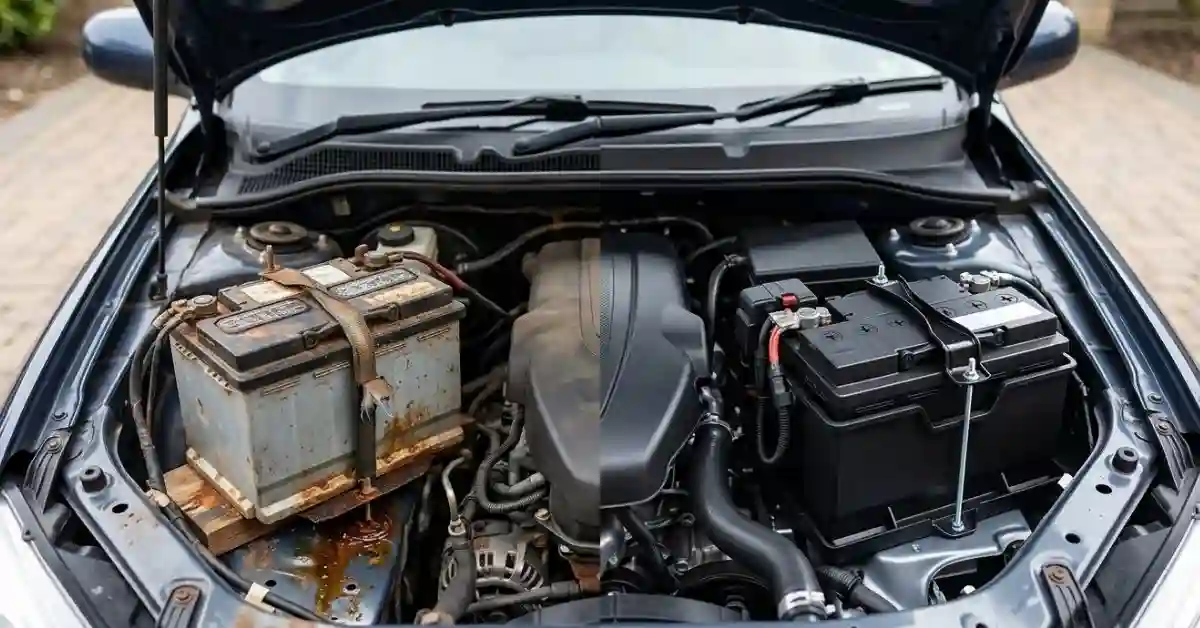
A battery tray can look like one of those small car parts that does not matter much—until the battery starts moving, leaking, or rubbing against something. Is a Battery Tray Necessary? In many vehicles, the answer is yes.
When I looked into battery mounting more closely, I found that the tray does much more than hold the battery in place. It can protect the battery, support the hold-down, catch small leaks, and keep the battery away from parts that could cause damage. But there are cases where a tray may not be needed in the same way.
This guide explains when you need one, what can happen without it, and how to tell if your battery setup is safe.
Is a Battery Tray Necessary for a Car Battery?
A battery tray is usually necessary when the vehicle was designed to use one. It gives the battery a firm base and works with the battery hold-down to keep it secure.
The tray itself does not stop the battery from moving by magic. The hold-down does that job. The tray gives the battery a stable place to sit.
| Battery setup | Tray need |
| Factory car battery | Usually needed |
| Battery in a custom mount | Depends on the mount |
| Loose battery on metal | Not a safe setup |
A typical car battery can be heavy. A common lead-acid battery may weigh around 30 to 50 pounds or more. That weight can move with the car.
Hard braking, sharp turns, bumps, and crashes can all put force on the battery. A proper tray and hold-down help keep it where it belongs.
What Does a Battery Tray Actually Do?
A battery tray supports the battery from below. It can also help protect the surface under it from battery acid or corrosion.
In many vehicles, the tray has raised edges or a shape that matches the battery. Some also have mounting points for the battery hold-down.
| Tray job | Why it matters |
| Supports battery | Gives it a stable base |
| Helps contain leaks | Protects nearby metal |
| Works with hold-down | Helps prevent battery movement |
One thing that is easy to misunderstand is the difference between the tray and the hold-down.
The tray supports the battery. The hold-down clamps it in place.
You normally want both.
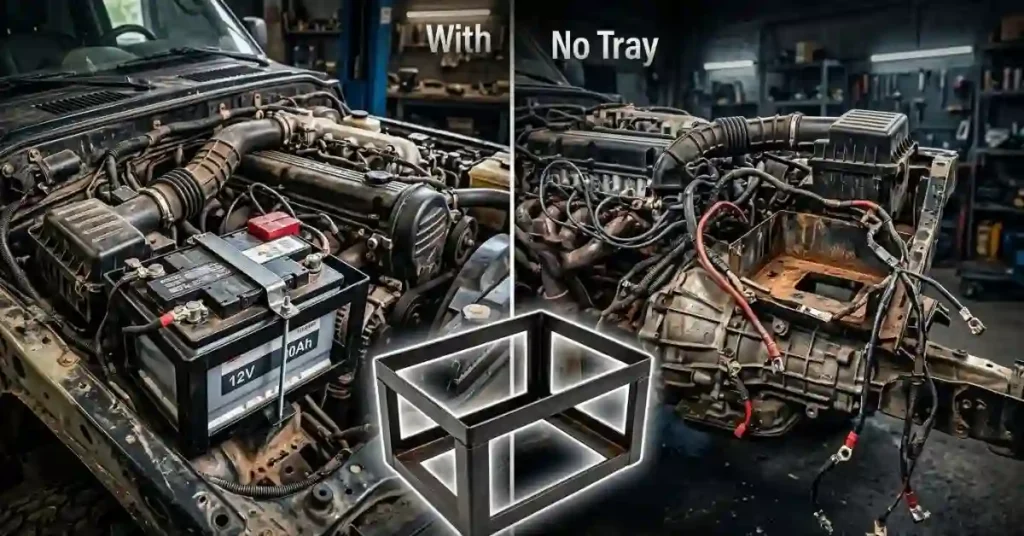
What Happens If You Don’t Use a Battery Tray?
Skipping the tray can create several problems. Some are small at first. Others can become costly.
The biggest issue is battery movement. A battery that can slide or bounce around may pull on the battery cables. That can put stress on the terminals and cable ends.
| Problem | Possible result |
| Battery moves | Cable or terminal damage |
| Battery rubs on metal | Case damage |
| Acid reaches metal | Corrosion |
I also think this is where many DIY battery jobs go wrong. The battery may look stable when the car is parked. That does not mean it will stay stable while driving.
A battery should not depend on its own weight to stay put.
Can a Battery Sit Directly on the Car?
In some setups, a battery may sit on a solid mounting surface without a traditional tray. But it still needs proper support and restraint.
The surface must be strong. The battery must fit well. The hold-down must be made for the battery and mounting system.
A bare battery sitting on loose metal is a different story.
If it can slide, tilt, bounce, or touch nearby metal parts, the setup needs attention.
Why Battery Movement Is a Bigger Problem Than It Looks
Battery movement may seem harmless. It is not something I would ignore.
The battery cables are connected to the battery terminals. If the battery shifts, the cables may move with it or get pulled tight.
That can cause several issues.
Battery Movement Can Damage Terminals
Battery terminals are not designed to act like handles.
If a heavy battery keeps moving, the cable ends can get pulled or twisted. Over time, that can lead to a loose connection.
A loose battery connection can cause hard starting, electrical faults, or intermittent power.
Battery Movement Can Damage the Battery Case
A battery case can be tough, but it is not meant to scrape against sharp metal.
Repeated rubbing can damage the plastic case. A damaged case can allow electrolyte to escape.
| What you notice | What to check |
| Battery slides | Tray and hold-down |
| Case has marks | Contact points |
| Cable feels tight | Battery position |
This is one reason I would rather fix a loose battery early than wait for a starting problem.
Is a Battery Tray Necessary With a Battery Hold-Down?
Yes, in most factory-style setups, the tray and hold-down serve different purposes.
The tray supports the battery. The hold-down keeps it from moving.
Think of it like a box on a shelf. The shelf supports the box, while a strap keeps the box from sliding off.
Can a Hold-Down Work Without a Tray?
It can depend on the design.
A custom battery mount may use a strong base plate instead of a traditional tray. That can work if the battery is properly supported and secured.
But simply adding a clamp to a battery sitting on an unsuitable surface is not a good substitute for a proper mount.
| Setup | Main concern |
| Factory tray + hold-down | Normal design |
| Custom metal base + hold-down | Must be properly designed |
| Loose battery + strap | Poor restraint |
The key is not the shape or name of the part. The key is whether the battery has a safe, strong mounting system.
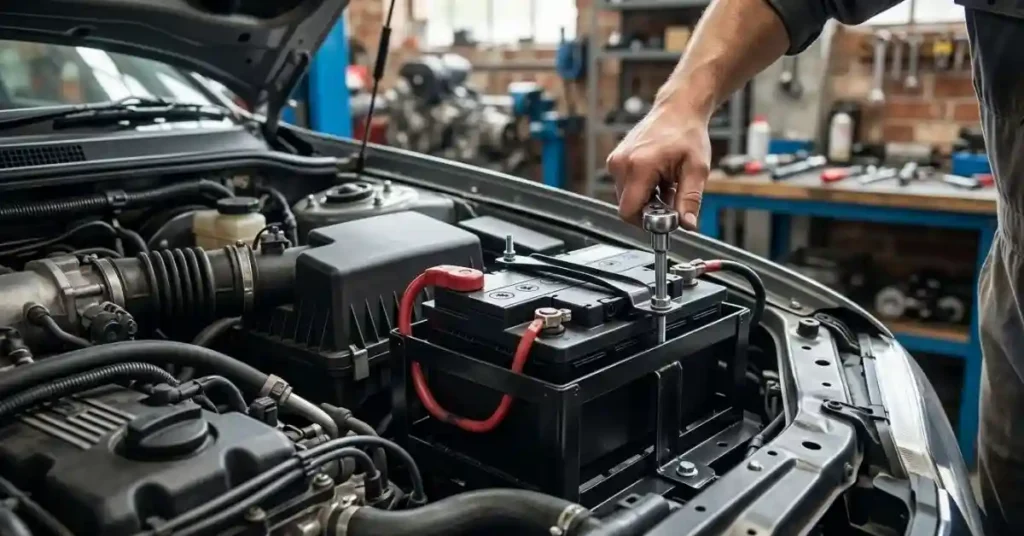
Does a Battery Tray Protect Against Battery Acid?
It can help, but it should not be treated as an acid-proof shield.
Traditional lead-acid batteries contain electrolyte. A damaged, overfilled, or poorly maintained battery can leak.
A tray can catch or contain some electrolyte before it reaches the vehicle body.
Battery Acid and Corrosion Go Together
Battery acid can cause corrosion on nearby metal parts. Corrosion may spread beyond the area that first gets wet.
If you find white, blue, or green corrosion near a battery, do not just clean the visible area and forget about it.
Look for the source.
| Sign | What it may mean |
| White crust | Battery terminal corrosion |
| Rust near tray | Possible moisture or electrolyte exposure |
| Damaged tray | Long-term corrosion |
The exact cause can vary. Water, road salt, dirt, and battery fumes can also play a role.
A tray helps, but it does not replace good battery care.
What Type of Battery Tray Do You Need?
The right tray depends on the battery and the vehicle.
A tray is not a universal part that fits every battery. Battery size, terminal position, mounting points, and hold-down style all matter.
Before buying one, check the battery dimensions and the original mounting system.
Match the Tray to the Battery Size
Measure the battery rather than guessing from its name.
Check:
- Length
- Width
- Height
- Terminal position
- Bottom mounting lip, if used
- Hold-down location
A battery can fit inside a tray and still be wrong for the mounting system.
| Check | Why |
| Battery size | Prevents poor fit |
| Terminal position | Avoids cable problems |
| Hold-down points | Ensures secure mounting |
This is a simple step that can save a lot of frustration.
Plastic vs Metal Battery Trays
Battery trays commonly come in plastic, coated metal, or other materials.
Neither material is automatically right for every vehicle. The design and fit matter more.
Plastic trays resist many corrosion problems. Metal trays can be very strong when properly protected.
| Tray material | Common advantage |
| Plastic | Good corrosion resistance |
| Coated metal | Strong and durable |
| Unprotected metal | Can corrode |
If a metal tray has rusted badly, I would not assume it is still strong just because it looks mostly intact.
Check the mounting points closely.
How Do You Know If Your Battery Tray Needs Replacing?
A battery tray does not always fail in an obvious way.
Sometimes the damage is easy to see. Other times, the tray looks fine until you press on a weak area.
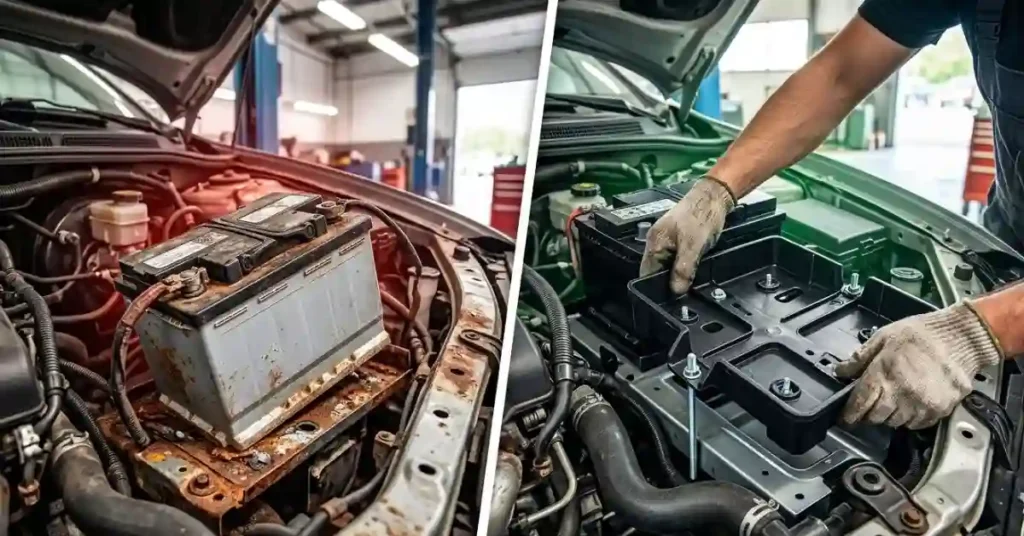
Look for cracks, deep rust, bent mounting points, or signs that the battery no longer sits flat.
Check These Areas First
Open the hood and inspect the battery mounting area with the engine off.
Look for:
- Cracks
- Heavy rust
- Broken mounting points
- Bent metal
- Acid damage
- Loose bolts
- A missing hold-down
- Battery movement
Do not test battery security by aggressively shaking the battery.
A visual check and a gentle check for unwanted movement are enough.
| Tray condition | Practical action |
| Clean and solid | Keep using it |
| Light surface rust | Clean and inspect |
| Cracked or weak | Replace it |
If the battery itself is damaged or leaking, deal with that problem before focusing only on the tray.
Common Battery Tray Mistakes I Would Avoid
A few mistakes come up again and again with battery mounting.
The biggest one is treating the tray as optional just because the battery seems heavy enough to stay put.
It is not.
Mistake 1: Using the Wrong Tray
A tray that is too large can let the battery move. One that is too small may not support the battery correctly.
Mistake 2: Ignoring the Hold-Down
A good tray cannot make up for a missing or loose hold-down.
Mistake 3: Reusing a Badly Corroded Tray
Rust can weaken mounting points. If the tray is badly damaged, replacing it is often simpler than trying to save it.
| Mistake | Better approach |
| Guessing the tray size | Measure first |
| Skipping the hold-down | Use proper restraint |
| Ignoring rust | Inspect the whole mount |
Another mistake is focusing only on the battery terminals.
Clean terminals are important, but a secure battery matters too.
Is a Battery Tray Necessary for an Auxiliary or Marine Battery?
This depends on the installation.
An auxiliary battery in a camper, boat, trailer, or custom vehicle still needs a secure mounting system. The exact setup may look different from a normal car tray.
In these cases, vibration can be an even bigger concern.
Custom Battery Mounts Still Need Proper Support
A custom installation does not mean the battery can simply be strapped down anywhere.
The mount should keep the battery secure during normal movement. It should also protect the battery case and keep the terminals from contacting nearby metal.
| Custom setup | What matters most |
| Camper battery | Secure base and restraint |
| Boat battery | Vibration and movement control |
| Auxiliary car battery | Strong mounting points |
For a custom build, follow the battery maker’s mounting instructions and local safety rules.
When Might a Traditional Battery Tray Not Be Necessary?
There are situations where you may not need a traditional tray.
For example, a vehicle may use a built-in battery compartment or another engineered mounting system.
Some custom battery boxes also provide the support that a traditional tray would provide.
The important point is this:
You need a safe battery mounting system. You do not always need a part literally called a battery tray.
Battery Box vs Battery Tray
A battery box can provide more protection than an open tray, depending on the application.
| Part | Main purpose |
| Battery tray | Supports the battery |
| Battery box | Encloses or protects the battery |
| Hold-down | Prevents movement |
The right choice depends on where the battery is installed and how it is used.
A Simple Battery Tray Inspection Checklist
You do not need a complicated process to check the mounting area.
With the vehicle safely parked and the engine off, inspect the battery and its mount.
What I Would Check First
Start with the battery position.
Is it sitting flat? Is it centered? Does anything touch the case? Is the hold-down present and secure?
Then look below the battery.
Check the tray for cracks, rust, corrosion, or loose mounting bolts.
| Inspection | Good sign |
| Battery position | Sits flat |
| Tray | Solid and intact |
| Hold-down | Secure |
| Cables | Not pulled tight |
If anything looks wrong, fix the mounting issue before it becomes an electrical problem.
Is a Battery Tray Necessary? The Practical Answer
For most vehicles designed with a battery tray, yes, it is necessary. The tray provides support, helps protect the mounting surface, and works with the hold-down to keep the battery secure.
But the real requirement is not the tray itself. It is proper battery support and restraint.
If your vehicle uses a different factory mounting system, or you have a well-designed custom mount, a traditional tray may not be required.
The biggest lesson I took from researching battery mounting is simple: never judge a battery mount while the car is sitting still. A battery that looks secure in the driveway can behave very differently over bumps, during hard braking, or on rough roads.
If your battery moves, the tray is damaged, or the hold-down is missing, it is worth fixing before the next drive. A secure battery is a small part of a vehicle, but it plays a very important role.
FAQs About Is a Battery Tray Necessary?
1. Is a Battery Tray Necessary for a Car Battery?
Yes, a battery tray is usually needed when the car was built for one. It supports the battery and helps keep it stable with the hold-down.
2. Can a Car Battery Work Without a Battery Tray?
A car battery can work without a standard tray if another strong mount supports it. The battery must stay firm and clear of nearby metal parts.
3. What Does a Battery Tray Do?
A battery tray supports the battery and helps protect the area below it. It can also help contain small leaks and limit battery movement.
4. Is a Battery Hold-Down Enough Without a Tray?
Not always. A hold-down stops movement, but the battery still needs a firm base. A proper battery tray and hold-down work best together.
5. How Do I Know If My Battery Tray Needs Replacing?
Check for cracks, deep rust, loose bolts, or battery movement. Replace a weak battery tray before it can affect battery safety or cable connections.
To Get More About Home, Car Tools Product You Can Visit Our Site. If You Found our Posts Helpful Leave a Comment Below