
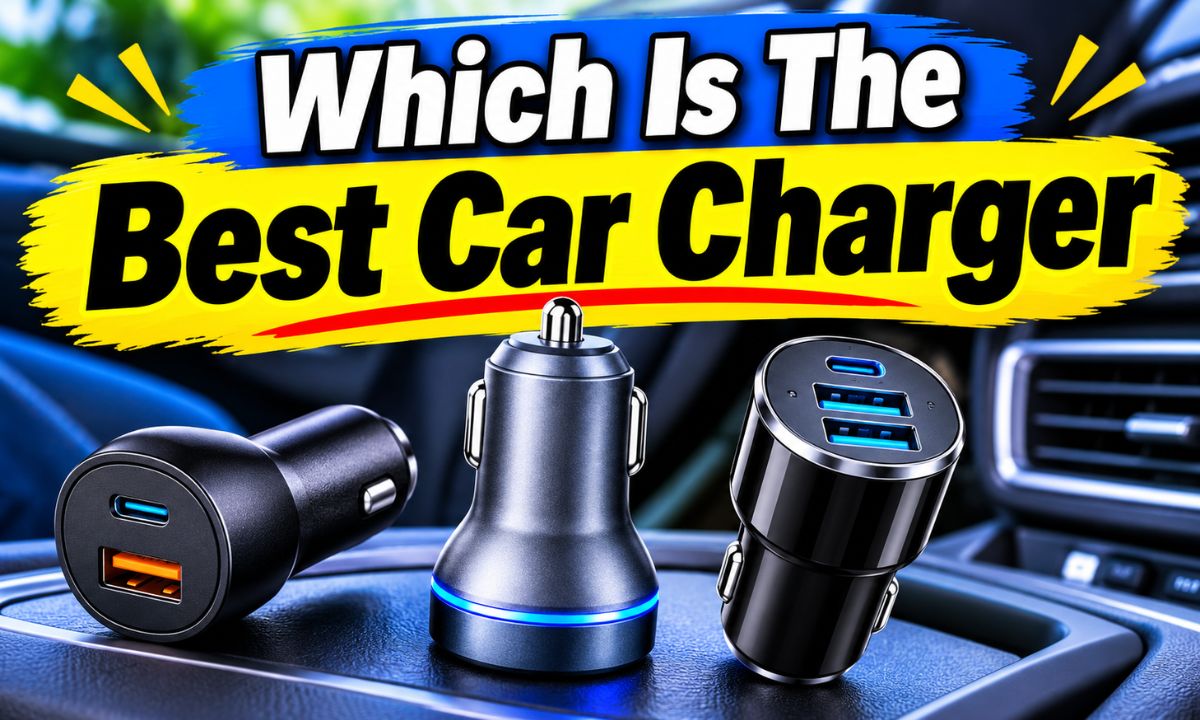
The LISEN retractable Car Charger is my top overall pick for convenient charging and built-in cables on daily drives.
Imagine driving to work on a busy Monday morning in the United States. Your phone battery sits at 15%, your GPS is running, and you still need to make a few calls before reaching the office. You plug in your car charger, but the cable is too short or you have to search through your bag for the right one. A good car charger can make this daily problem much easier. It should charge your devices, fit your vehicle, and work with the cables and ports you need. In this guide, I compare three options to help you decide which is the best car charger for your driving habits.
Table of Contents
Toggle🏆 Top 3 Products

LISEN Retractable 84W 4-in-1 Car Charger
Its built-in retractable cables and multiple charging connections make it a convenient choice for everyday driving.

125W All-Metal Dual-Port Car Charger
Its advertised high output and dual charging support make it appealing for drivers who want a compact, powerful adapter.

Ankuee Dual-Socket 12V/24V Car Charger
It offers extra socket access and a voltage display for drivers who need to power several car accessories.
LISEN Retractable 84W 4-in-1 Car Charger
The LISEN Retractable Car Charger is my first choice for drivers who want a simple way to charge several types of devices. Its product listing advertises an 84W output and a 4-in-1 design with built-in charging cables. The retractable cable setup can help reduce loose wires around the center console. This is useful when you drive every day and want your charging gear close at hand. Instead of carrying several separate cables, you can keep the charging connections in one place.
I like the idea of this design for busy American households. One person may use an iPhone, while another carries a Samsung phone or a different USB-C device. Built-in cables can make it easier to share a charging point during a family trip or daily commute. The product title also mentions support for newer iPhone models and Galaxy devices. However, you should check the exact connector types and your phone’s charging needs before buying. The advertised total output does not mean every connected device will receive the full 84W.
✅ Pros
- ✔ Retractable cables help keep the car interior neat.
- ✔ The 4-in-1 design offers several charging connections in one unit.
- ✔ The advertised 84W output makes it an appealing option for drivers who want fast charging.
- ✔ Built-in cables reduce the need to carry separate charging wires.
- ✔ The design can suit drivers who use more than one type of mobile device.
- ✔ It can be convenient for family trips when passengers need charging access.
- ✔ A compact all-in-one setup can reduce loose cables around the dashboard.
- ✔ The cigarette lighter connection works with compatible vehicle power outlets.
⚠️ Cons
- ✖ Built-in cables may not suit every device or connector type.
- ✖ A retractable cable can become less convenient if its length does not reach your preferred phone position.
- ✖ The total advertised output may be shared between connected devices.
- ✖ Drivers who prefer separate, replaceable cables may not like the integrated design.
- ✖ You must check the available socket space and nearby controls in your vehicle.
- ✖ The product title alone does not establish the exact charging speed for every phone.
My Recommendation
I would choose the LISEN charger for everyday drivers who value convenience, cable storage, and flexible device connections. It is especially appealing if you often forget to bring charging cables or have several people using the same car. The retractable design can help keep the center console tidy, while the advertised 84W output gives it a strong place in this comparison. Before ordering, I would confirm that its built-in connectors match my devices. I would also check the charging specifications for my phone because not every phone accepts the same charging power. For most people looking for a convenient daily charging setup, this is the product I would consider first when deciding which is the best car charger.
| Best For | Why |
|---|---|
| Daily commuters | Built-in retractable cables can make regular phone charging easier and reduce cable clutter. |
| Families | Multiple charging connections can help passengers with different devices. |
| Drivers who dislike loose wires | The retractable cable design offers a neater alternative to several separate charging cables. |
125W All-Metal Dual-Port USB-C Car Charger
The 125W USB-C Car Charger is a strong option for drivers who care more about charging power than built-in cables. Its product title advertises a combined output of 125W, with PD65W and QC60W charging support. PD means Power Delivery, a charging system used by many modern USB-C devices. QC means Quick Charge, another charging technology used by compatible phones and accessories. The listing also highlights a dual-port setup and an all-metal body. Together, these features make it worth considering if you want a small adapter for more than one device.
I especially like the simple idea behind this design. You plug it into a compatible cigarette lighter socket and connect your devices using their own cables. This gives you more freedom to choose cable length and connector type. The flush-fit design may also appeal to drivers who dislike bulky adapters sticking far out of the dashboard. Its product title mentions iPhone, iPad, Samsung, and Pixel devices. Still, a high advertised wattage does not guarantee the same charging speed for every device. Your phone, cable, and charging port must all support the required power level.
✅ Pros
- ✔ The listing advertises a combined maximum output of 125W.
- ✔ The PD65W output specification may suit compatible USB-C devices.
- ✔ The QC60W specification provides another advertised fast-charging option for compatible devices.
- ✔ Two charging ports allow users to connect more than one device.
- ✔ The all-metal construction gives the adapter a solid design.
- ✔ A flush-fit shape can help reduce how far the charger extends from the socket.
- ✔ Separate cables allow users to choose the length and connector they prefer.
- ✔ The product title lists compatibility with several popular phone and tablet families.
⚠️ Cons
- ✖ You must bring your own charging cables.
- ✖ The advertised 125W total does not mean one device always receives 125W.
- ✖ Charging speeds depend on the connected device and its supported charging standard.
- ✖ A metal body may become warm during normal operation, so temperature guidance in the manual matters.
- ✖ The flush-fit shape may be harder to grip when removing it from a tight socket.
- ✖ Drivers with older devices may not benefit from all the advertised charging power.
My Recommendation
I recommend this model for drivers who want a powerful dual-port adapter and already own suitable USB-C cables. It is a good match for people who regularly charge a phone and another compatible device during the same drive. Its advertised PD65W and QC60W outputs also make it interesting for users who want different fast-charging options. However, I would not buy it based on the 125W number alone. I would first confirm the power output of each port, how the charger divides power between two devices, and whether my phone supports the listed charging standards. If raw charging capability is your main concern, this is a strong contender when comparing which is the best car charger.
| Best For | Why |
|---|---|
| USB-C phone users | The advertised Power Delivery support may provide fast charging for compatible phones. |
| Drivers with two devices | The dual-port design allows two compatible devices to connect at the same time. |
| Drivers who prefer their own cables | Separate cables offer more choice in length, connector type, and replacement. |
Ankuee Dual-Socket 12V/24V Car Charger
The Ankuee 12V/24V Car Cigarette Lighter Splitter serves a different purpose from a standard USB car charger. It focuses on expanding the power options available inside your vehicle. Its product title lists a dual-socket output, USB-C support, and an LED voltmeter display. This setup may help drivers connect more accessories without constantly switching plugs. For example, you may want to keep a GPS unit or dash camera connected while also using a phone charger. The extra socket access can make that arrangement easier, provided your vehicle and accessories support the required power.
I would consider this product for drivers who use several electronic accessories during daily travel. It may be useful in an older car with only one 12V power outlet. The listed 12V/24V compatibility also makes it worth checking for suitable vehicles with different electrical systems. Another useful feature is the LED voltage display. It can show a voltage reading that gives you a quick view of the vehicle’s electrical system. However, a voltage display is not a full battery health test. You should also check the total power limit and the instructions before connecting several devices.
✅ Pros
- ✔ The dual-socket design expands the number of available accessory connections.
- ✔ The listing states compatibility with 12V and 24V systems.
- ✔ USB-C support provides an additional connection for compatible devices.
- ✔ The LED voltmeter display offers a visible voltage reading.
- ✔ It may help drivers power a phone and other vehicle accessories together.
- ✔ It can reduce the need to unplug one accessory whenever another is needed.
- ✔ The design may suit vehicles with limited original power outlets.
- ✔ It offers more flexibility for drivers who use GPS units and dash cameras.
⚠️ Cons
- ✖ It is a splitter and accessory power hub rather than a simple high-speed phone charger.
- ✖ The exact USB-C charging speed is not established by the product title.
- ✖ The total electrical load must remain within the device and vehicle limits.
- ✖ Connecting several accessories can create more cable clutter.
- ✖ The LED voltage reading does not replace a proper battery inspection.
- ✖ The extra sockets may take up more space around the center console.
- ✖ Drivers who only need one phone charging port may find the design unnecessary.
My Recommendation
I would recommend the Ankuee splitter to drivers who need more than a basic phone charging connection. It makes the most sense if your vehicle has one power outlet but you want to use a dash camera, GPS unit, and phone charger together. The dual-socket layout and LED voltmeter are its main selling points. I would not choose it as my first option if fast phone charging is the only goal. Instead, I would compare its USB-C output rating with my phone’s charging needs. I would also check the maximum load and confirm that every connected accessory stays within the allowed limit. It is a useful alternative in the search for which is the best car charger if accessory expansion matters more than charging speed.
| Best For | Why |
|---|---|
| Drivers with several accessories | The dual-socket design offers extra connections for compatible vehicle electronics. |
| GPS and dash camera users | It can help keep multiple accessories connected while providing another USB-C connection. |
| Drivers who want voltage information | The built-in LED voltmeter provides a visible electrical voltage reading. |
Final Verdict: Which Should You Buy?
After comparing all three products, I would choose the LISEN Retractable 84W 4-in-1 Car Charger as the best overall option. Its built-in cables, retractable design, and multiple charging connections make it practical for everyday driving. The 125W all-metal model is my choice for drivers who want a high advertised output and prefer separate cables. The Ankuee is better for people who need extra accessory sockets and a voltage display. The right choice depends on your devices, vehicle, and daily needs.
If you are still asking which is the best car charger, start with your phone’s charging needs and your vehicle’s power outlet. Compare output, cable type, port count, and safety features before ordering. A well-matched charger can make every commute and road trip easier.
FAQs Of which is the best car charger
Q Which is the best car charger for everyday use?
Q Is a 125W car charger better than an 84W car charger?
Q Can I charge two phones at the same time in my car?
Q Does a fast car charger work with every smartphone?
Q Can a car charger drain my car battery?
1 thought on “Which Is The Best Car Charger: 3 Top Picks”